
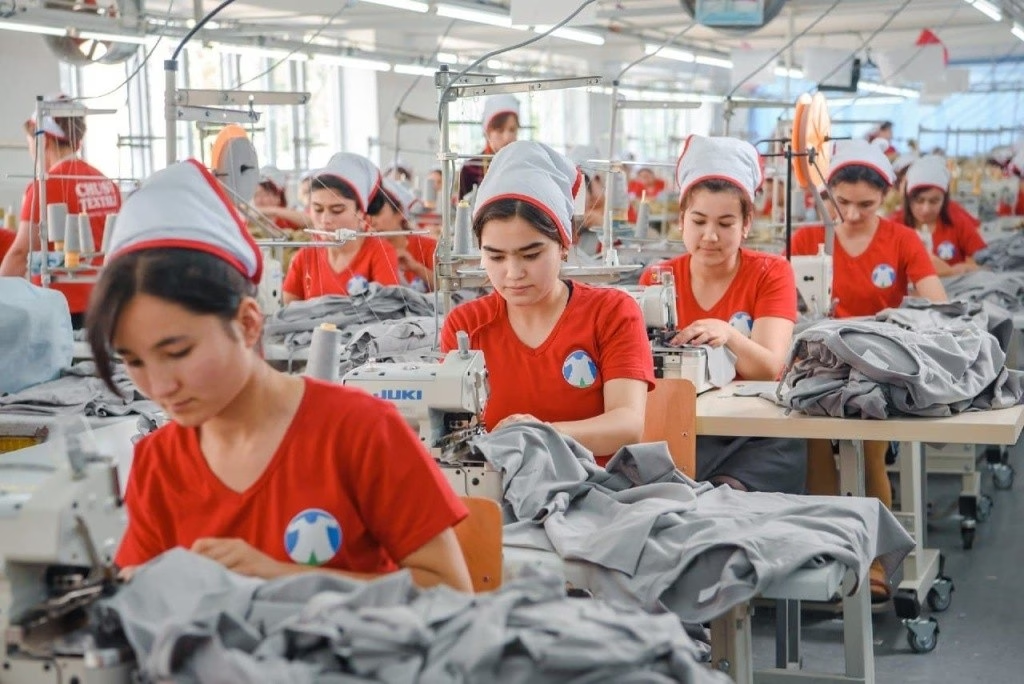
Uzbekistan Textile Industry
Uzbekistan’s textile industry, a cornerstone of its economic diversification strategy, is facing a period of uncertainty as global cotton prices continue to decline and geopolitical tensions disrupt trade flows. Despite impressive growth over the past five years, recent data and government statements suggest the sector is now grappling with significant challenges that threaten its momentum.
A Decade of Growth Under Pressure
President Shavkat Mirziyoyev, speaking at a government meeting focused on industrial development, highlighted the sector’s achievements: 396 large textile enterprises launched with a cumulative investment of $3.5 billion, generating $10 billion in output and employing around 500,000 people. These figures underscore the strategic importance of textiles in Uzbekistan’s broader economic transformation, especially as the country seeks to reduce its reliance on raw commodity exports and build value-added industries.
However, Mirziyoyev acknowledged that production and exports have slowed in recent months. He attributed this to a combination of global economic and political headwinds, including supply chain disruptions, inflationary pressures, and shifting trade dynamics. The president emphasized the urgency of implementing measures to sustain output and protect jobs, calling for coordinated action between economic authorities and scientific institutions.
Cotton Price Collapse: A Structural Challenge
One of the most pressing issues facing Uzbekistan’s textile industry is the sharp decline in global cotton prices. Over the past three years, prices have plummeted from $3,000 to $1,500 per tonne—a 50% drop that has severely impacted profitability across production clusters. This downturn, Mirziyoyev noted, began well before the current geopolitical tensions and reflects deeper structural shifts in global commodity markets.
The fall in cotton prices is particularly problematic for Uzbekistan, which has historically been one of the world’s largest cotton producers. Although the country has made strides in moving up the value chain—shifting from raw cotton exports to finished textile goods—the industry remains vulnerable to fluctuations in raw material prices. Lower cotton prices reduce margins for manufacturers, discourage investment, and can lead to layoffs if not managed carefully.
Recent Investments Signal Long-Term Commitment
Despite the current slowdown, Uzbekistan continues to invest in its textile sector. A recent example is the opening of an $11 million textile plant in Nurafshan, which reflects the government’s long-term commitment to industrial development. Such investments are crucial for modernizing production capabilities, improving efficiency, and expanding export potential.
The government’s strategy also includes fostering regional textile clusters, promoting innovation, and enhancing workforce skills. These efforts aim to create a more resilient and competitive industry that can weather global shocks and capitalize on emerging opportunities.
Global Context and Strategic Implications
Uzbekistan’s textile woes are not occurring in isolation. The global textile and apparel industry is undergoing a transformation, driven by changing consumer preferences, sustainability concerns, and digital disruption. Countries like Bangladesh, Vietnam, and India are also facing challenges, though some have managed to offset price pressures through diversification and branding.
For Uzbekistan, the key lies in accelerating its transition from commodity-based exports to branded, high-quality textile products. This requires investment not only in infrastructure but also in design, marketing, and international partnerships. The government’s push to coordinate with scientific institutions suggests a recognition that innovation and data-driven strategies will be essential.
Moreover, the slowdown presents an opportunity to reassess supply chain dependencies and explore new markets. With Europe, the Middle East, and parts of Asia showing demand for sustainable and ethically produced textiles, Uzbekistan could position itself as a reliable supplier—especially if it leverages its domestic cotton production to ensure traceability and quality.
Policy Recommendations and Future Outlook
To navigate the current crisis, Uzbekistan’s economic authorities may consider several policy interventions:
- Price Stabilization Mechanisms: Establishing buffer funds or subsidies to protect producers from volatile cotton prices.
- Export Diversification: Expanding into new markets and product categories to reduce reliance on traditional buyers.
- Technology Adoption: Investing in automation, AI-driven production planning, and digital supply chain tools.
- Sustainability Certification: Promoting eco-friendly practices and obtaining global certifications to enhance brand value.
- Public-Private Partnerships: Encouraging collaboration between government, academia, and industry to foster innovation.
While the challenges are significant, Uzbekistan’s textile industry has a strong foundation and a clear strategic direction. With proactive measures and continued investment, the sector can not only recover but emerge stronger and more globally competitive.
