
India’s Textile Exports Poised for Growth as China Loses Global Apparel Market Share
New Delhi, June 23: India’s textile and apparel industry is expected to witness stronger export growth in the coming years as China continues to lose its dominance in the global apparel market, creating new opportunities for Indian manufacturers and exporters, according to a recent report by Motilal Oswal.
The report highlights that improving global retail conditions, changing sourcing strategies, and supportive trade agreements are creating a favourable environment for India’s textile sector.
Global apparel retailers and fashion brands are becoming increasingly optimistic as inventory levels stabilize and consumer demand begins recovering across major markets such as the United States and Europe. Better inventory management and improved sell-through rates are encouraging brands to increase sourcing activities and place orders with greater visibility.
This trend is expected to benefit Indian textile exporters through stronger order flows, improved factory capacity utilization, and enhanced margin visibility.
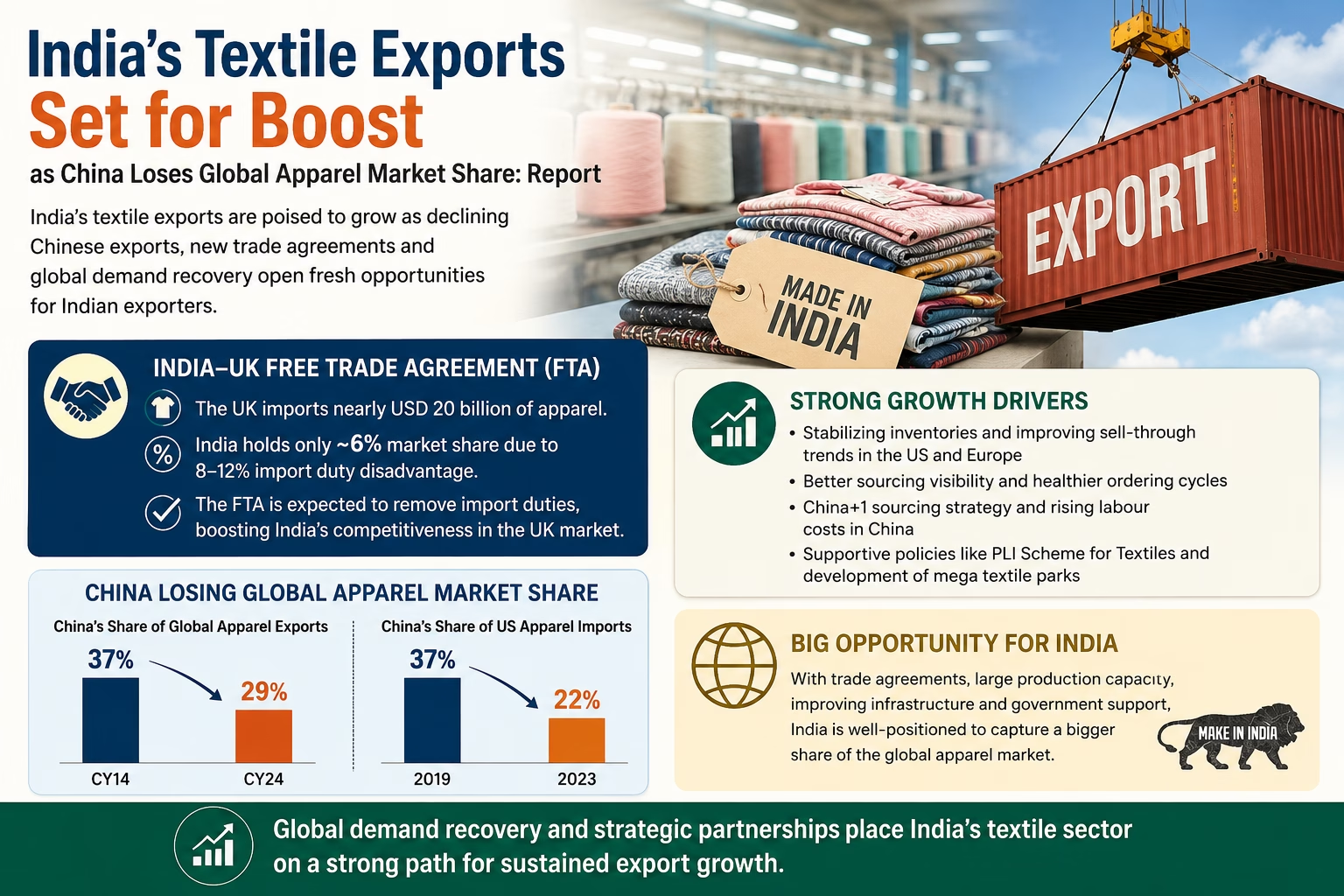
One of the major catalysts for growth is the recently concluded India–UK Free Trade Agreement (FTA). The agreement is expected to significantly strengthen India’s position in the UK apparel market by addressing existing tariff disadvantages.
The United Kingdom imports nearly USD 20 billion worth of apparel annually. However, India currently accounts for only around 6 per cent of the UK’s apparel imports, largely due to import duties ranging from 8 to 12 per cent. Competing countries such as Bangladesh, Turkey, and Cambodia have traditionally enjoyed duty-free access, giving them a competitive advantage.
According to the report, the proposed removal of import duties under the India–UK FTA could substantially improve India’s competitiveness and place Indian exporters on equal footing with major sourcing nations.
Another important factor driving optimism is China’s declining share in global apparel exports. China’s contribution to global apparel exports has fallen from 37 per cent in calendar year 2014 to 29 per cent in calendar year 2024.
Similarly, China’s share in US apparel imports dropped significantly from 37 per cent in 2019 to 22 per cent in 2023. This shift reflects changing global sourcing strategies and increasing efforts by international brands to diversify supply chains.
The report notes that the ongoing “China+1” strategy, under which global companies reduce dependence on China by expanding sourcing from alternative markets, is creating substantial opportunities for India.
Rising labour costs in China, combined with geopolitical uncertainties and supply chain diversification efforts, are encouraging global buyers to consider India as a long-term sourcing destination.
India is also strengthening its position through supportive government initiatives and investment in manufacturing capabilities. Programmes such as the Production Linked Incentive (PLI) Scheme for Textiles and the development of mega textile parks are expected to improve production efficiency, attract investment, and expand export capacity.
While countries like Bangladesh and Vietnam have traditionally benefited from lower production costs and favourable trade agreements, India is increasingly becoming competitive due to improving infrastructure, expanding production capacity, and stronger policy support.
Over the medium term, analysts expect India’s apparel exports to the UK and other global markets to rise steadily as international brands continue diversifying sourcing networks.
With global demand showing signs of recovery and strategic trade partnerships opening new markets, India’s textile industry appears well-positioned to strengthen its role in the global apparel supply chain. Source
