
Tiruppur Textile Exports Expected to Reach $11.5 Billion by 2030: Union Minister Giriraj Singh
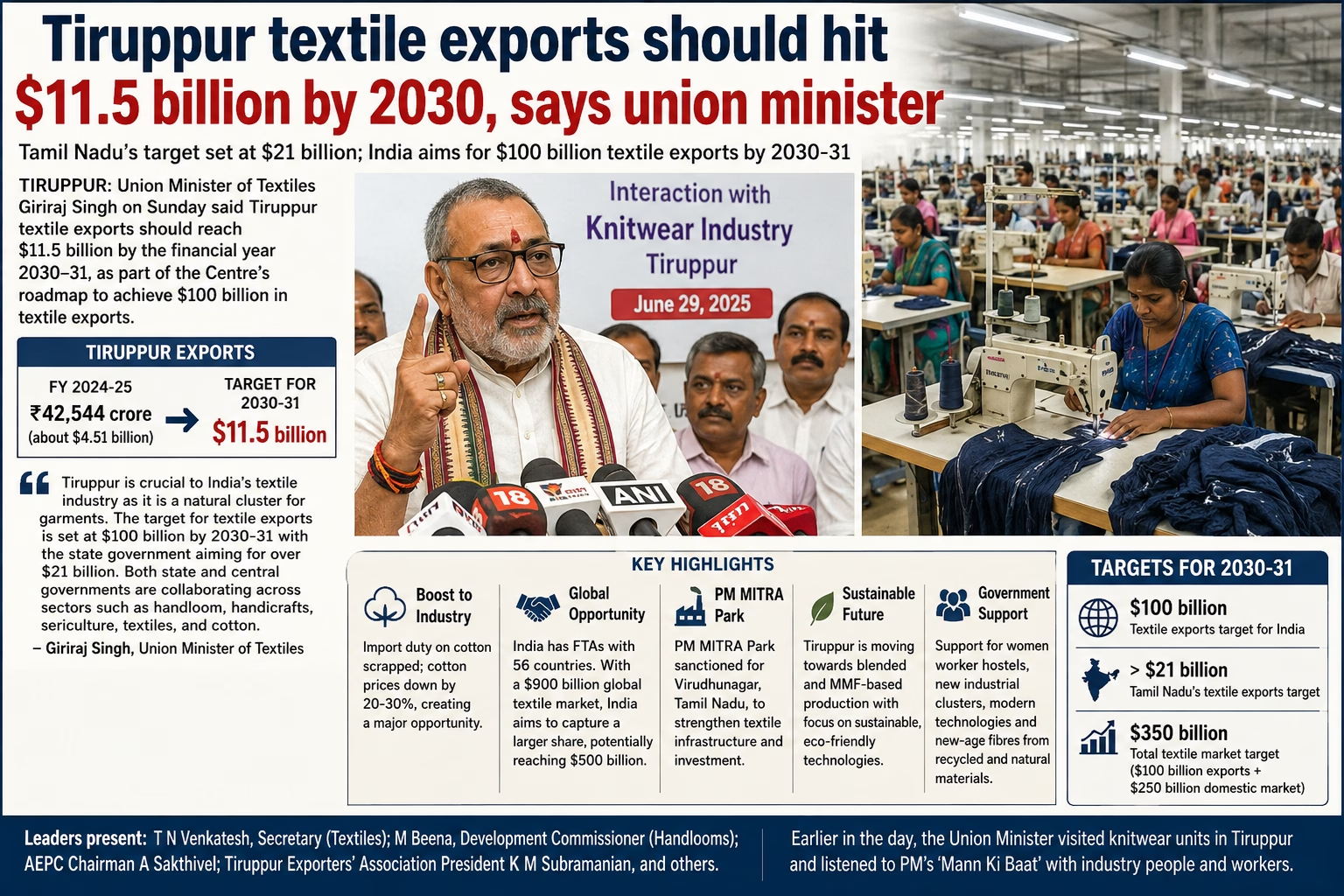
TIRUPPUR: Union Minister of Textiles Giriraj Singh has set an ambitious vision for India’s textile industry, stating that Tiruppur’s textile exports should reach $11.5 billion by the financial year 2030–31. The announcement aligns with the central government’s broader roadmap of achieving $100 billion in textile exports while targeting a total textile market value of $350 billion, including domestic consumption.
During his visit to Tiruppur on Sunday, the minister met representatives from the knitwear and textile industry and urged exporters and manufacturers to work collectively to achieve this milestone. Tiruppur, widely recognised as one of India’s most important garment manufacturing clusters, exported goods worth approximately ₹42,544 crore (around $4.51 billion) in the last financial year.
Addressing the media, Giriraj Singh described Tiruppur as a vital pillar of India’s textile ecosystem. He noted that the region’s strong industrial base and established export network position it as a major contributor to India’s future growth plans.
“The target for textile exports has been set at $100 billion by 2030–31, while Tamil Nadu’s contribution is expected to exceed $21 billion. Both the state and central governments are working together across sectors including textiles, cotton, handlooms, handicrafts, and sericulture,” the minister said.
He further highlighted government initiatives aimed at strengthening textile infrastructure and industrial development. One of the major projects supporting this growth is the Pradhan Mantri Mega Integrated Textile Region and Apparel (PM MITRA) Park, which has already been sanctioned for Virudhunagar district in Tamil Nadu. The project is expected to improve manufacturing capabilities, logistics efficiency, and investment opportunities for the sector.
Speaking about industry competitiveness, the minister stated that the import duty on cotton has been removed, which is expected to support industrial growth by lowering input costs. According to him, reduced cotton prices—already down by approximately 20–30 percent—present a strong opportunity for textile manufacturers and exporters.
Giriraj Singh also referred to India’s expanding network of Free Trade Agreements (FTAs) and their role in opening new global markets. He noted that India has significantly increased trade engagement with partner countries compared with earlier years.
According to the minister, the international market for imported textiles and garments is currently estimated at nearly $900 billion, and India aims to secure a larger share of this market through improved trade access and stronger export performance.
The minister expressed confidence that these trade opportunities would benefit major textile-producing regions including Tiruppur, Maharashtra, and Gujarat, helping increase exports and create new employment opportunities.
Another key area of focus during the discussion was the changing manufacturing landscape of Tiruppur. The minister acknowledged that the city is moving beyond traditional cotton-based production and increasingly adopting blended fabrics and man-made fibre (MMF) manufacturing. He praised local industries for embracing environmentally responsible production practices and sustainable technologies.
To support long-term industrial growth, Giriraj Singh assured industry stakeholders that the central government would continue extending support in areas such as establishing hostels for women workers, creating new industrial clusters, and encouraging the adoption of modern manufacturing technologies.
He also emphasised India’s opportunity to become a global leader in producing next-generation fibres based on recycled and natural materials while nurturing a new generation of entrepreneurs.
Several senior officials and industry leaders attended the event, including T N Venkatesh, Secretary for Tamil Nadu Handlooms, Handicrafts, Textiles and Khadi Department; M Beena, Development Commissioner for Handlooms; A Sakthivel, Chairman of AEPC; and K M Subramanian, President of the Tiruppur Exporters’ Association.
Earlier in the day, the Union Minister visited knitwear units in Tiruppur and joined industry representatives and workers to listen to the Prime Minister’s Mann Ki Baat programme.
With strong policy support, infrastructure expansion, and growing global opportunities, Tiruppur is expected to play a central role in shaping India’s textile export growth over the coming decade.
