
Tamil Nadu Targets ₹1,000-Crore Investment in Technical Textiles by 2030
Coimbatore, Tamil Nadu Targets: Tamil Nadu has announced an ambitious plan to attract investments worth ₹1,000 crore in the technical textiles sector by 2030, strengthening its position as one of India’s leading textile hubs. The announcement was made by T.N. Venkatesh, Principal Secretary of the Department of Handlooms, Textiles, Khadi and Handicrafts, during the inauguration of a conference on technical textiles held in Coimbatore on Thursday.
The State government’s strategy is focused on encouraging investment, especially from the Micro, Small and Medium Enterprises (MSME) sector, to accelerate growth in functional and high-performance textiles. Technical textiles are specialized textile products designed primarily for performance and functionality rather than aesthetics and are increasingly used across multiple industries.
According to the government, Tamil Nadu will prioritise technical textile applications in key sectors such as automobiles, healthcare, sports, agriculture, and construction. These segments are expected to become major growth drivers as industries continue to adopt advanced materials and innovative textile solutions.
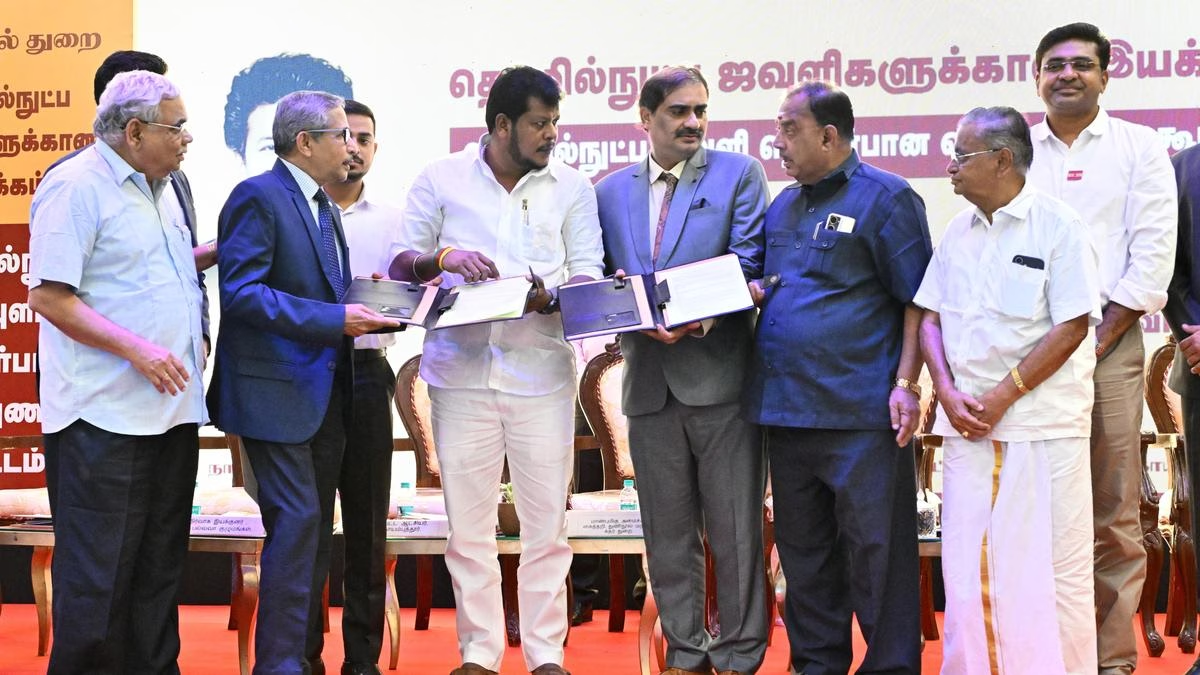
During the event, several industrial establishments signed Memoranda of Understanding (MoUs) with the State government, committing investments worth ₹123 crore. These proposed facilities are expected to become operational by the end of the current year, providing momentum to the State’s industrial development agenda.
T.N. Venkatesh also announced that Tamil Nadu plans to establish at least five new technical textile industrial units across four major regions of the State within the next three years. Additionally, the government intends to create a dedicated Centre of Excellence for athleisure and sports-related textile products to promote innovation, product development, and market expansion.
Highlighting the State’s export potential, Venkatesh noted that Tamil Nadu’s annual textile exports currently stand at approximately $8 billion. He added that the Central government has set a target to increase textile exports from the State to $21 billion, creating significant opportunities for investment, manufacturing expansion, and employment generation.
Tamil Nadu Minister for Handlooms, Textiles and Khadi, M. Vijay Balaji, reaffirmed the government’s commitment to revitalising and strengthening the textile industry. He acknowledged that while Tamil Nadu has historically been a leader in textiles, increased competition from countries such as Bangladesh has impacted market dynamics.
The Minister stated that the Department would continue implementing policies aimed at attracting new investments and creating employment opportunities throughout the textile value chain. He emphasised that the State aims to transform the technical textile industry into a globally recognised model.
Coimbatore District Collector Pavankumar G. Giriyappanavar highlighted the importance of the textile sector to the district’s economy, noting that technical textiles represent one of the fastest-growing opportunities for regional industrial development.
Industry leaders also shared recommendations to support sector growth. Durai Palanisamy, Chairperson of the Southern India Mills Association (SIMA), suggested converting the existing interest subvention scheme for technical textile investments into a 15% capital subsidy. He stated that while cotton remains Tamil Nadu’s traditional strength, future expansion would depend significantly on the growth of manmade fibre.
He also urged the government to introduce additional measures to strengthen the textile processing segment to improve competitiveness and value addition.
Supporting the growth outlook, K.S. Sundararaman, Chairperson of the SIMA Cotton Development and Research Association, noted that technical textiles offer one of the highest asset-to-turnover ratios within the textile and apparel industry. He encouraged manufacturers to leverage government support schemes and emerging market opportunities to expand into this high-potential segment.
With policy support, infrastructure development, and growing industry participation, Tamil Nadu is positioning itself to become a major destination for technical textile manufacturing and innovation over the coming decade.
