
Unspun Targets a New Category of Apparel Production With 3D Weaving and Automation
San Francisco, Aug. 27, 2026 — Apparel manufacturing may be entering a new phase as technology company unspun works to create a more automated and demand-driven production model designed to reduce lead times, material waste and dependence on labor-intensive assembly.
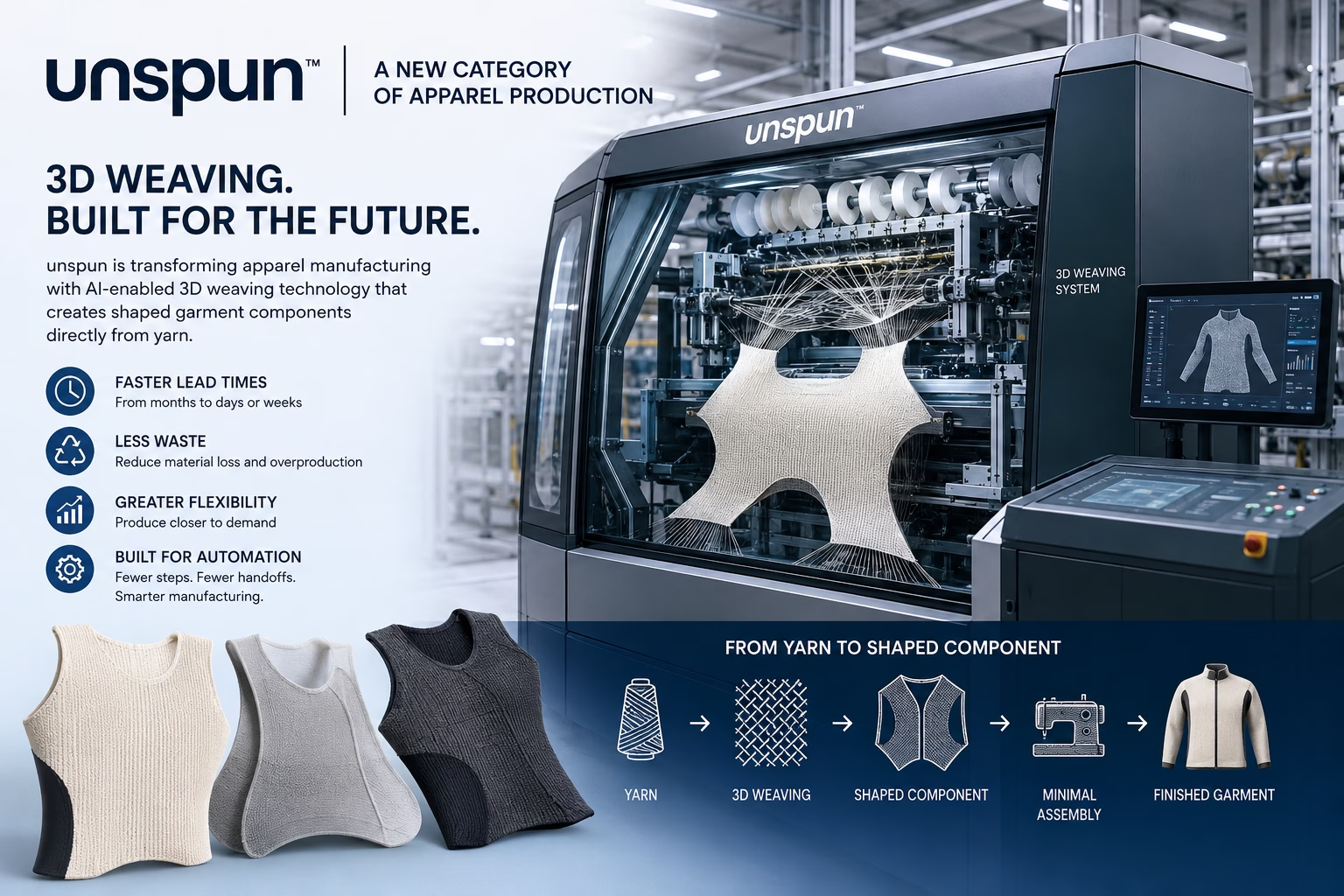
Backed by more than $50 million in venture funding, the San Francisco-based startup is developing an AI-enabled 3D weaving platform that aims to manufacture shaped garment components directly from yarn.
Rethinking Traditional Apparel Manufacturing
Traditional apparel production generally follows several stages: fabric is woven or knitted, shipped, cut into pattern pieces, sewn together and finished. While many upstream textile processes are highly automated, garment assembly remains difficult to automate because fabrics are flexible and sewing involves complex, variable movements.
unspun is taking a different approach. Instead of producing large quantities of flat fabric and cutting them into pieces later, its technology is designed to introduce garment shape during textile formation itself.
The company believes this can reduce the number of downstream cutting, sewing and handling operations required to produce a garment.
Why Speed Is Becoming More Important
Fashion brands are dealing with increasingly unpredictable demand, pressure to reduce overproduction, labor shortages and changing global trade conditions.
Traditional supply chains often require brands to forecast demand months in advance and place large production orders. When demand forecasts are wrong, the result can be excess inventory, markdowns and textile waste.
unspun’s strategy is aimed at bringing production closer to actual demand. By reducing production steps and improving automation, the company believes apparel could eventually be manufactured in shorter cycles and with greater flexibility.
Moving Complexity Upstream
The central idea behind unspun’s technology is relatively simple: instead of trying to make robots better at sewing, change the production process so there is less sewing to do.
Its system combines automated textile formation with software-based control and optimization. The company says this approach is intended to improve consistency, reduce manual handling and create a production system that can operate with fewer handoffs.
This represents a potential shift from traditional cut-and-sew manufacturing toward a more digitally controlled production architecture.
From Research to Commercial Deployment
In March 2026, unspun appointed Arne Arens as CEO. Arens previously held senior leadership positions in the global apparel and outdoor industries, including at The North Face and Boardriders.
His appointment comes as unspun moves from technology development toward industrial deployment, commercialization and broader customer adoption.
The company is now focused on proving that its technology can work not only as an innovative textile process but also as a commercially viable manufacturing system.
What It Could Mean for Brands
If the technology scales successfully, the potential benefits could extend beyond faster production.
Shorter lead times could allow brands to respond more quickly to changing consumer demand. Smaller and more flexible production runs could reduce inventory risk, while fewer manufacturing steps could potentially lower material loss and labor requirements.
For manufacturers, the bigger opportunity may be the ability to build more responsive production closer to regional markets rather than relying entirely on long, global supply chains.
A Possible New Direction for Apparel Manufacturing
Apparel has been one of the world’s largest manufacturing industries for decades, but its basic production model has changed relatively slowly.
unspun is betting that the next major change will not simply come from adding more robots to existing factories. Instead, it believes the industry needs to rethink how garments are made in the first place.
The company’s progress will ultimately depend on whether its 3D weaving and automation platform can achieve the reliability, cost, quality and production scale required by major apparel brands.
If it can, unspun could help move apparel manufacturing from a forecast-driven, labor-intensive model toward a more automated, flexible and demand-driven system.
