
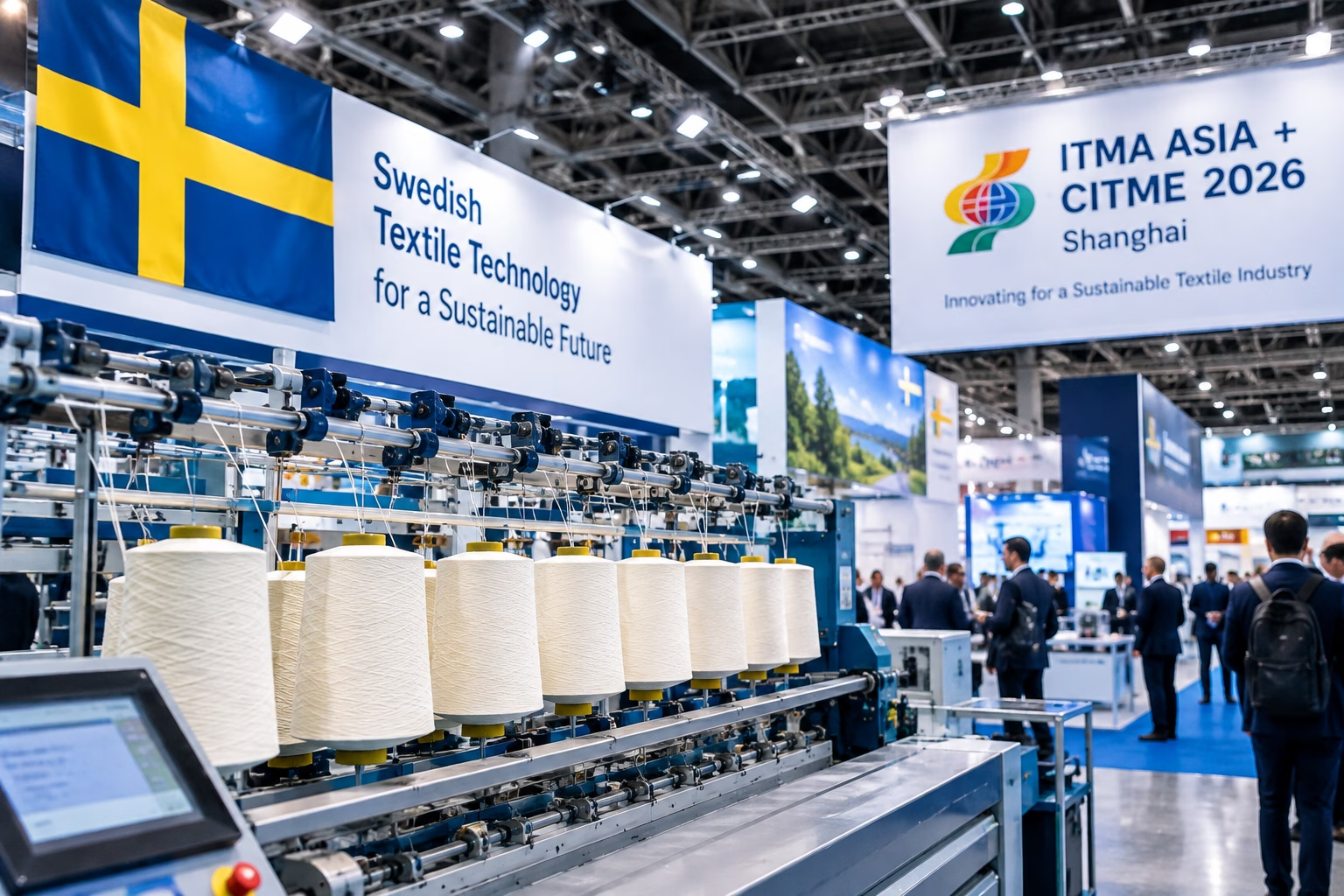
Swedish Textile Technology Targets Smarter Production at ITMA Asia 2026
Shanghai, China: Swedish textile machinery companies are bringing a new wave of automation, recycling and resource-efficient technologies to ITMA Asia + CITME 2026, as textile manufacturers across Asia look for smarter and more sustainable production solutions.
The exhibition will take place from November 20 to 24, 2026, at the National Exhibition and Convention Center in Shanghai. More than 1,800 companies have applied to exhibit, with almost 90% of applicants coming from China.
The event is expected to place strong emphasis on automation, recycling, digitalization and traceability, making Shanghai an important marketplace for the next generation of textile machinery investment in Asia.
Swedish companies bring new technologies
Members of the Textile Machinery Association of Sweden (TMAS) have introduced several technologies during 2026 aimed at improving productivity while reducing resource consumption.
ACG Kinna has expanded its facility in Skene by 1,000 square meters to meet growing global demand for automated textile and finished-product production systems.
Imogo has opened a new showroom, test center and production facility for its Dye-Max spray dyeing technology. The system can process around three tonnes of fabric per day while using as little as 0.7 litres of dye liquor per kilogram of fabric. The technology is designed to significantly reduce water, energy, chemical consumption and wastewater.
ReSpin is focusing on textile circularity through its RespinJenny technology. The system mechanically converts textile waste into high-grade fibres for new yarn production. The technology is being installed at Sweden’s first industrial spinning mill dedicated entirely to recycled textile fibres.
Automation moves beyond production speed
Other Swedish companies are focusing on process control, productivity and smarter manufacturing.
BW Converting will highlight the Baldwin TexCoat G4, a precision spray application system for textile finishing. The technology can reduce wet pickup by up to 50%, helping mills lower water consumption and drying energy.
Automatex has developed the P12-PB automatic lock-stitch quilting unit, which is designed to double productivity compared with older systems while reducing manual intervention.
Eton Systems is applying artificial intelligence to garment sorting through its aUPS module. The system evaluates used garments according to colour, size and style while detecting damage, helping companies make faster decisions about repair, reuse and resale.
These developments show how textile machinery is moving beyond simply increasing machine speed. Automation is increasingly being used to reduce waste, improve consistency, control resources and support circular production.
Asia remains a major machinery market
The Swedish technology push comes as Asian textile manufacturing hubs continue to attract machinery investment.
Italian textile machinery exports reached €1.675 billion in 2025, with Asia accounting for around 40% of exports and remaining the industry’s largest regional market. India was the leading individual market, with exports increasing 28% to €176 million.
Bangladesh also remained an important destination, importing around €30 million worth of Italian textile machinery during January–June 2025.
For Asian textile mills, machinery purchasing decisions are increasingly based on more than production capacity. Water consumption, energy efficiency, labour requirements, process stability, real-time production data and recycled-material capabilities are becoming important factors in investment decisions.
Swedish exhibitors at ITMA Asia + CITME 2026
Swedish companies will also showcase technologies focused on connected and controlled production.
Eltex will present its ACT-MULTI system, which monitors yarn tension and automatically controls processing conditions during heat-setting.
Vandewiele Sweden will showcase its expertise in weft feeding and tension control for high-speed weaving, with data-ready systems designed for connected factory environments.
For Swedish textile machinery manufacturers, ITMA Asia + CITME 2026 represents more than a traditional sales opportunity. It provides a platform to compete in a rapidly changing Asian market where textile producers are under growing pressure to produce faster, use fewer resources, improve quality and meet environmental requirements.
The direction is clear: the next generation of textile machinery will not be judged by speed alone. Smart automation, resource efficiency, digital control and circular production are becoming central to the future of textile manufacturing.
