
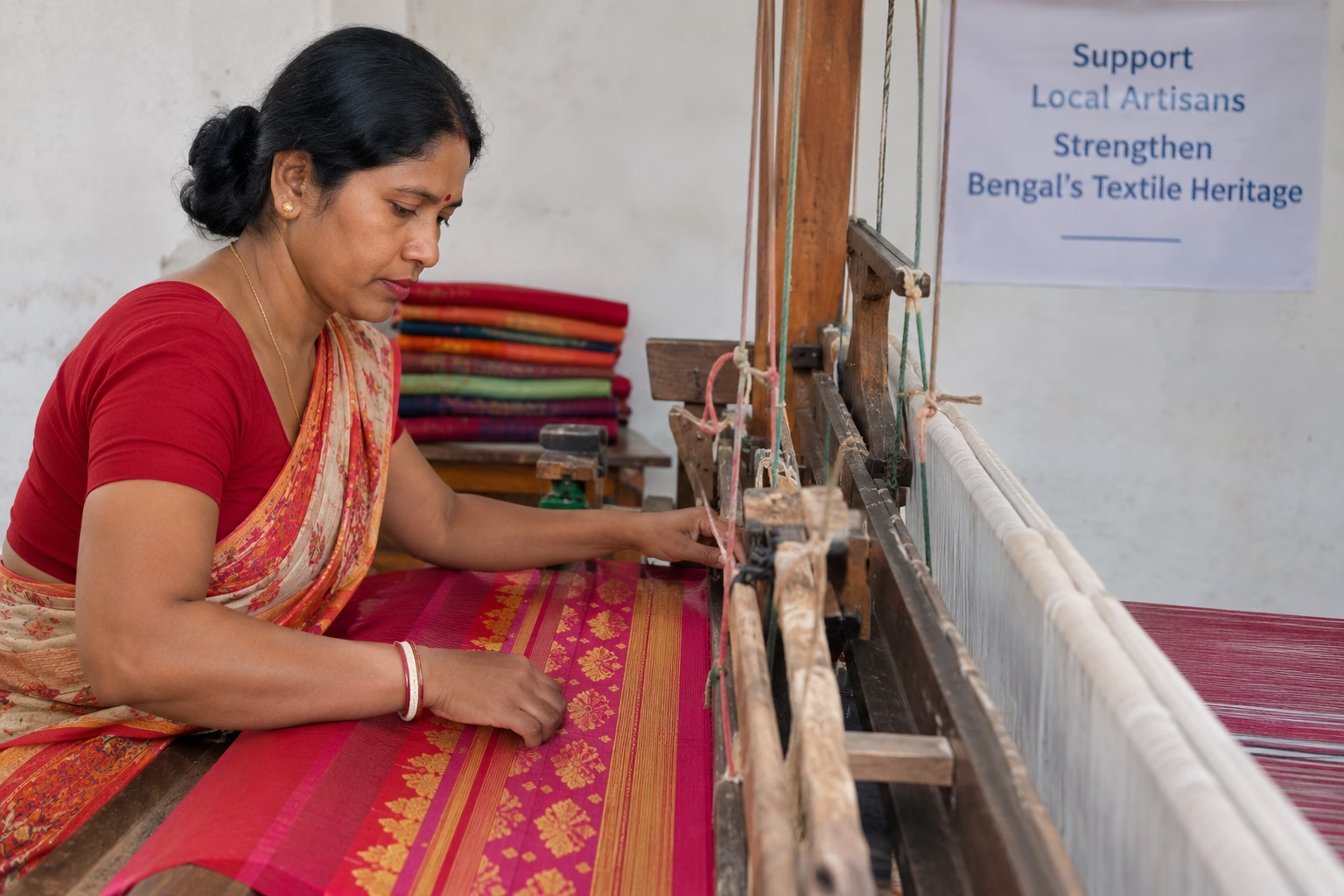
Bengal Plans Textile Hub to Boost Handloom, Artisans and Export Opportunities
Kolkata Bengal Plans Textile Hub: West Bengal is planning to establish a dedicated textile hub aimed at strengthening the state’s handloom and textile sector, supporting local weavers and artisans, and creating better market opportunities for textile products.
State Urban Development and Municipal Affairs Minister Agnimitra Paul announced the proposal, highlighting Bengal’s long-standing textile heritage and the need to provide artisans with better infrastructure, skills and access to domestic and international markets.
Speaking about the initiative, Paul said Bengal has a strong textile tradition and does not need to depend heavily on imported clothing when the state has a large base of skilled weavers and artisans.
Bengal Plans Textile Hub
“Bengal has a rich tradition of handloom and textile industry. We have Fulia’s handloom, Santipur’s handloom, Bishnupur’s Baluchari and Murshidabad’s silk. There are many examples of the state’s art and tradition,” she said.
The proposed textile hub is expected to provide a platform where textile artisans can work, develop their skills and improve the quality and presentation of their products. The initiative could also help bring different textile clusters under a more organised ecosystem, creating opportunities for collaboration between artisans, traders, exporters and other industry stakeholders.
A major objective of the proposed hub will be to establish a direct connection between artisans and larger markets. According to Paul, the government wants to ensure that products made by Bengal’s weavers and artisans reach exporters and traders more efficiently.
Bengal Plans Textile Hub: The initiative could be particularly significant for traditional textile clusters across the state. Fulia and Santipur are widely recognised for their handloom products, while Bishnupur is known for its distinctive Baluchari sarees. Murshidabad silk is another important part of Bengal’s textile identity.
By bringing these traditions into a more structured commercial environment, the proposed hub could help artisans move beyond traditional local markets and explore opportunities in organised retail, fashion brands, export markets and international trade.
The plan also places emphasis on international-standard infrastructure and stronger market linkages. Better infrastructure could support product development, sampling, quality improvement, packaging, merchandising and other activities required to meet the expectations of modern buyers.
For exporters and traders, a dedicated textile hub could provide access to a wider range of Bengal-made products from different textile clusters in one ecosystem. This could make sourcing easier and potentially create new business opportunities for both domestic and international buyers.
The proposal comes at a time when traditional Indian textiles are receiving greater attention in global markets, particularly for their craftsmanship, cultural value and unique designs. However, connecting traditional artisans with international buyers remains a challenge due to fragmented supply chains, limited market access and inadequate commercial infrastructure.
A structured textile hub could help address some of these challenges by creating stronger links between production and markets.
Bengal Plans Textile Hub: Paul said the broader objective is to showcase Bengal’s handloom and textile capabilities on a larger platform while connecting the sector with international-standard infrastructure and markets.
If implemented effectively, the proposed hub could become an important platform for Bengal’s textile economy, helping preserve traditional skills while creating new commercial opportunities for weavers, artisans, traders and exporters.
The initiative could ultimately help position Bengal’s traditional textiles not only as products of cultural heritage but also as commercially competitive products for modern domestic and global markets. Bengal Plans Textile Hub.
