
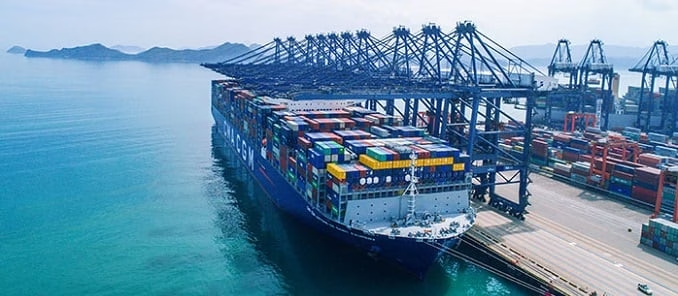
Container Handling Surcharges in Vietnam Up 50% in 10 Years
Vietnam’s cargo owners are paying significantly more in container handling surcharges than they did a decade ago. According to the Vietnam Ship Agents and Brokers Association (VISABA), terminal handling charges (THC) and related surcharges imposed by foreign shipping lines have increased by nearly 50% over the past ten years.
How Much Have the Charges Increased?
- In 2013:
- THC for a 20-foot container was around $90
- THC for a 40-foot container was about $140
- By 2023:
- These rose to approximately $125 and $195, respectively
That’s an increase of nearly 50%—a burden that directly affects Vietnamese exporters and importers, most of whom rely heavily on foreign shipping companies.
What is THC and Why Does It Matter?
Terminal Handling Charges (THC) are fees collected by shipping lines to cover the cost of:
- Moving containers from ships to the yard (and vice versa)
- Port storage and equipment use
- Labor involved in loading and unloading
While such fees are common globally, what’s different in Vietnam is how much of that fee actually goes to the local ports.
📉 Vietnam Ports Get Less Than Half
VISABA reports a major issue: the local ports in Vietnam receive only about 40% of the THC collected by foreign carriers. Here’s a breakdown:
- Cargo owners pay about $173 per container
- But Vietnamese ports receive only $69 on average
Compare this to:
- Thailand: Ports receive 72% of the THC
- Philippines: Ports receive 73%
- Singapore: Ports receive 58%, even with higher operating costs
This means that Vietnamese ports and logistics operators are underpaid, while foreign shipping lines pocket a larger share, raising concerns about profit leakage and fair pricing.
Hidden Surcharges & Lack of Transparency
VISABA and other industry groups have voiced concerns about how:
- THC and other surcharges are increased without proper explanation
- No government body currently monitors or regulates these charges
- During freight downturns, carriers kept surcharges high to offset losses
Apart from THC, cargo owners are also forced to pay:
- Container imbalance fees
- Fuel surcharges
- Cleaning charges
- Congestion surcharges
- Peak season surcharges, etc.
This growing list of add-ons raises the total cost of shipping significantly—hurting the profit margins of Vietnamese exporters, especially small and medium-sized enterprises (SMEs).
90% of Vietnam’s Cargo Moved by Foreign Carriers
Vietnam is highly dependent on foreign shipping lines—especially the top 10 global players like Maersk, MSC, CMA CGM, Hapag-Lloyd, and others.
With over 90% of imports and exports handled by these global firms, local businesses have little choice but to accept the rising charges. This imbalance of power has led to:
- Price manipulation
- Reduced transparency
- Weakened competitiveness for Vietnamese exports
VISABA’s Recommendations
In light of these issues, VISABA has called for urgent action:
- Government Oversight:
- Create a regulatory framework to monitor THC and other surcharges.
- Ensure that all shipping lines declare surcharge structures clearly.
- International Audit:
- Engage third-party global consultants to review the fairness and transparency of the surcharges.
- Transparent Pricing Models:
- Require shipping companies to justify price hikes and link fees to actual service improvements or costs.
- Protect Local Ports:
- Increase the share of THC received by Vietnamese port operators, enabling them to reinvest in infrastructure and sustainability.
Why This Matters for Vietnam’s Economy
- Export-driven economy: Vietnam relies heavily on global trade—especially in textiles, electronics, and furniture.
- Rising logistics costs: These surcharges make Vietnamese products more expensive and less competitive in global markets.
- Weaker port development: With ports earning a smaller cut, it’s harder to upgrade facilities and adopt green, modern technologies.
