
Japan Wool Textile Reports Stronger Profit Margins as Earnings Improve
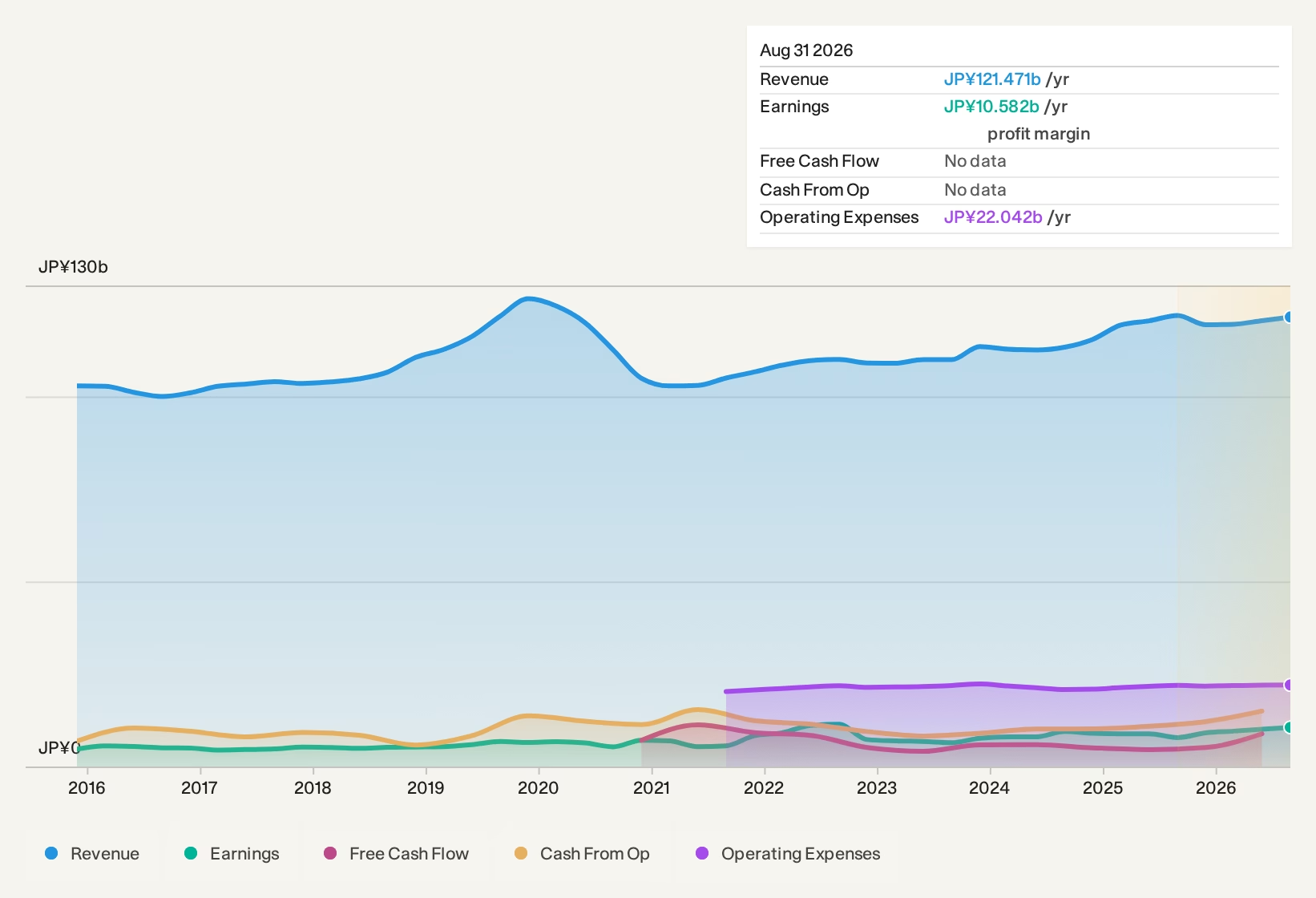
Japan Wool Textile Co. (TSE: 3201) has reported improved profitability, with its net profit margin rising to 8.7% from 6.4% a year earlier. The Japanese textile and materials group has also recorded year-on-year growth in quarterly revenue, net income and earnings per share, highlighting stronger financial performance despite relatively muted movement in its share price.
The company’s shares closed at ¥1,976, according to the provided market report. While the stock has recorded only modest gains over the past three months, the improvement in earnings and margins has drawn attention to the company’s profitability.
Revenue and Earnings Show Year-on-Year Growth
Japan Wool Textile’s third-quarter 2026 financial figures indicate an improvement in earnings compared with the corresponding period of the previous year.
Key financial figures include:
- Revenue: ¥29,476 million, compared with ¥28,480 million in Q3 2025.
- Net income excluding extra items: ¥2,532 million, up from ¥2,009 million.
- Basic earnings per share (EPS): ¥38.88, compared with ¥29.11 a year earlier.
- Trailing 12-month net profit margin: 8.7%, compared with 6.4% in the previous year.
Revenue increased by approximately 3.5%, while net income excluding extra items rose by around 26%. Basic EPS also recorded substantial year-on-year growth.
The stronger increase in earnings relative to revenue suggests that improved profitability, rather than sales growth alone, contributed to the company’s performance. However, the available figures do not establish whether the improvement resulted primarily from lower costs, changes in product mix, operational efficiencies or other factors.
Higher Margins Highlight Profitability Improvement
The increase in net profit margin from 6.4% to 8.7% is a notable development for a business operating across textile and related activities.
Profit margins are an important indicator for textile manufacturers and materials companies, where raw material prices, energy expenses, labour costs and pricing pressures can affect financial performance.
A higher margin means the company is retaining more profit from its revenue than it did a year earlier. If sustained, this improvement could provide greater flexibility to manage operating expenses and invest in business operations.
Nevertheless, maintaining stronger margins will depend on future revenue trends, production costs, market demand and the company’s ability to manage its diversified business activities.
Share Price Performance Remains Relatively Muted
Despite the improvement in earnings, Japan Wool Textile’s share price has not shown equally strong momentum in recent weeks.
The stock’s relatively limited movement over the past three months, alongside a slight decline over the preceding 30 days, presents a contrast with its stronger reported profitability.
This divergence highlights the difference between a company’s financial performance and investor expectations. Share prices can also be influenced by broader market conditions, valuation levels, future growth expectations and developments across individual business segments.
The latest financial figures provide evidence of improved profitability, but they do not, by themselves, establish whether the stock is undervalued or indicate its future price direction.
Financial Strength and Future Growth Remain Important
Investors assessing Japan Wool Textile’s longer-term prospects will also need to examine its balance sheet, liquidity, debt levels and cash flow. These factors help determine how effectively a company can fund capital expenditure, meet financial obligations and maintain shareholder distributions during periods of weaker demand.
The company’s future performance will also depend on whether it can sustain its margin improvement while generating consistent revenue growth.
For the wider textile industry, the results underline the importance of profitability and cost management alongside sales expansion. As manufacturers navigate changing input costs and competitive market conditions, stronger margins can provide a useful measure of operating performance.
Japan Wool Textile’s latest reported figures show a clear year-on-year improvement in earnings and profitability. Whether this translates into sustained business growth and stronger share-price performance will depend on its subsequent financial results and broader market conditions.
