
1000 Year Old Viking Textile Production Center Discovered Near Aarhus, Denmark
Archaeologists in Denmark have uncovered a major Viking Age production settlement near Søften in eastern Jutland, revealing evidence of large-scale textile manufacturing that supported regional trade more than 1,000 years ago.
1000 Year Old Viking Textile Production Center Discovered Near Aarhus, Denmark
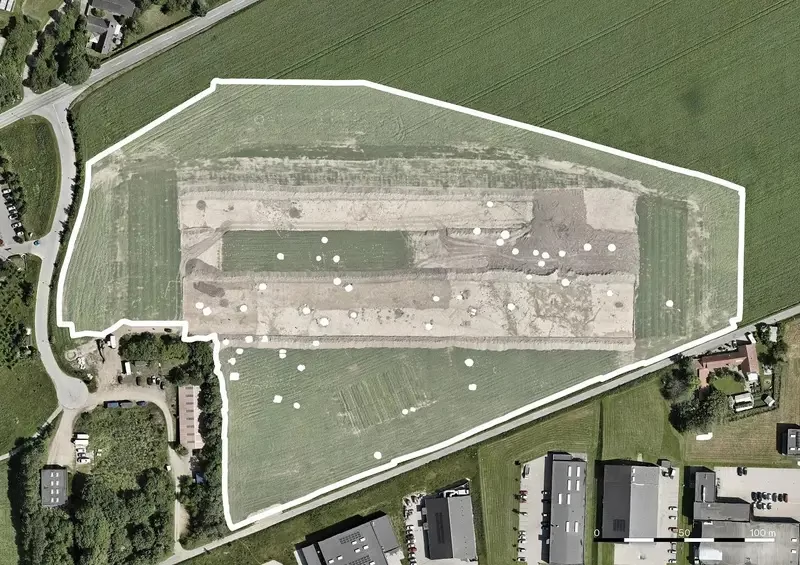
Located around 10 kilometers north of present-day Aarhus, the newly excavated site appears to have functioned as a specialized production center rather than a traditional farming village. Researchers from the Moesgaard Museum say the settlement covered at least 100,000 square meters and was carefully organized to support industrial-scale work.
The strongest evidence points to textile production as the settlement’s primary activity. Archaeologists discovered a dedicated area where flax was processed before being transformed into linen. Flax was one of the most important raw materials for textile making during the Viking Age, and its presence suggests that cloth production formed the foundation of the local economy.
Viking Textile Production in Denmark
One of the most significant discoveries was the identification of 82 pit houses—small sunken buildings commonly associated with Viking workshops. Many of these structures contained spindle whorls and loom weights, tools directly connected with spinning thread and weaving fabric. The number and concentration of these finds indicate production far beyond household needs.
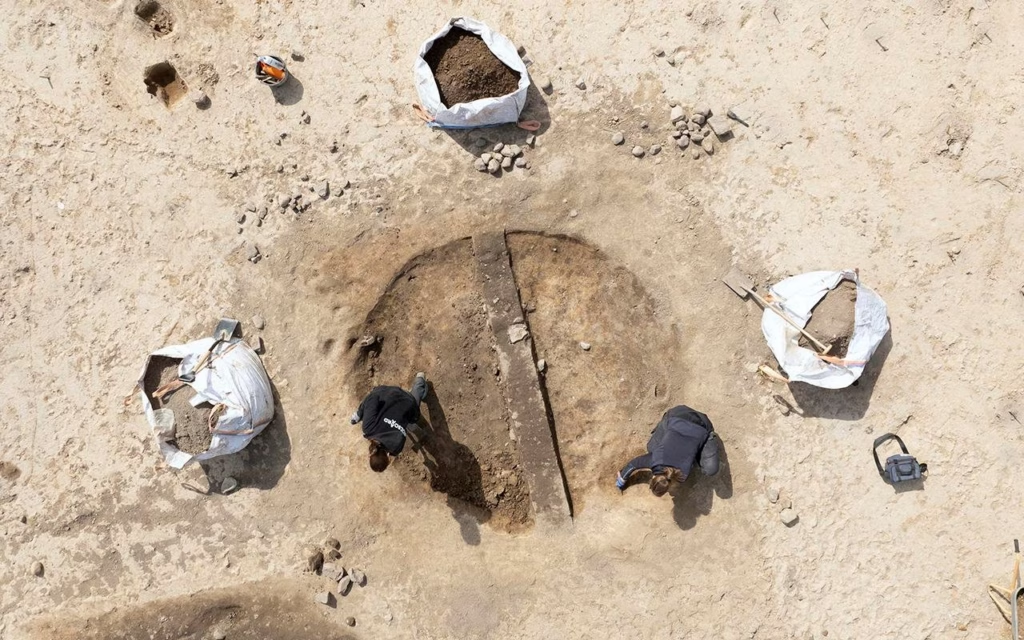
Excavation leaders say the layout of the settlement demonstrates advanced planning. Separate zones were used for different activities, including textile manufacturing and other forms of handcraft work. Researchers also identified a single house positioned apart from the workshop areas. They believe this building may have served as the residence of a manager or overseer responsible for organizing workers, handling raw materials, and supervising daily operations.
According to excavation leader Liv Stidsing Reher-Langberg, the site is unusual because of its strong specialization. While textile production existed at many Viking settlements, few known locations show such a clear concentration of labor focused on a single industry.
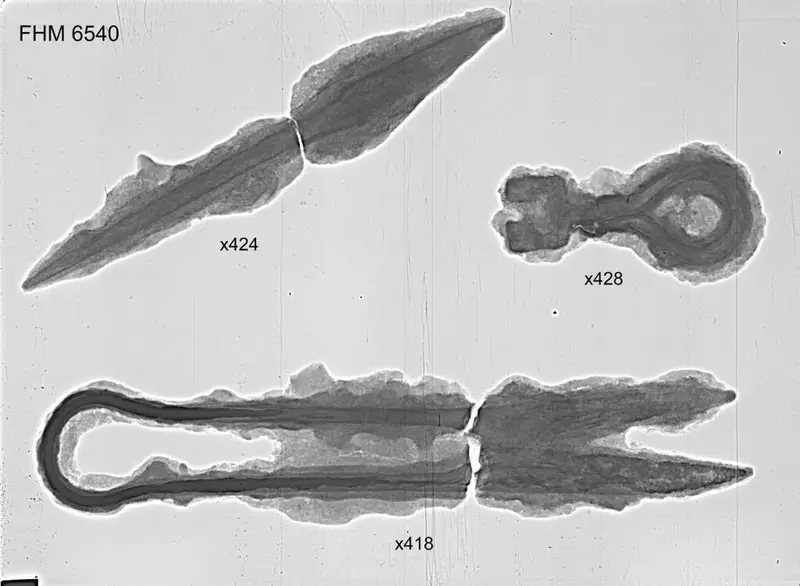
Additional discoveries—including silver coins, fragments of cut silver, glass beads, and pottery—highlight the settlement’s role in regional trade networks. Archaeologists believe many finished goods were transported south to Aros, the Viking settlement that later developed into modern Aarhus.
Historians suggest the scale of production was intended to support expanding trade markets rather than only nearby communities. The findings reinforce the idea that Aros operated as an important commercial hub connecting producers across Denmark with wider northern European trade routes.
The discovery also supports earlier archaeological work in the region. Nearby excavations at Lisbjerg uncovered an elite Viking estate linked to Aros, while a silver hoard found at Elsted in 2024 further demonstrated the area’s economic importance.
The current excavation began in August 2025 and covers more than 60,000 square meters. Researchers are now carrying out radiocarbon testing and pollen analysis to determine the site’s exact age and better understand how flax moved from cultivation to cloth production before entering Viking trade networks.
