
Budget 2026-27 Brings Big Boost
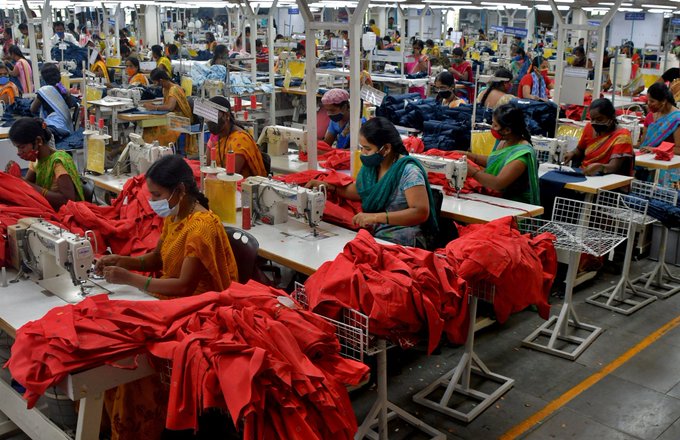
The Union Budget 2026-27 has brought major relief and growth opportunities for India’s textile industry with the announcement of a comprehensive five-part integrated programme aimed at supporting labour-intensive industries. The textile sector, one of the country’s largest employment generators, is expected to receive significant support through schemes focused on fibre development, skill modernization, MSME growth, and strengthening traditional sectors like Khadi and handloom.
The Government’s latest budget proposals are being viewed as a strong step toward making India more competitive in the global textile market while creating employment opportunities for millions of workers. The new measures are expected to especially benefit textile hubs such as Surat, Tiruppur, Ludhiana, Ahmedabad, and other major manufacturing centres.
Among the key highlights announced for the textile sector is the launch of the National Fibre Scheme, which is designed to strengthen India’s fibre ecosystem and improve the availability and quality of raw materials used in textile manufacturing. Industry experts believe that this move will help reduce dependency on imports and improve the competitiveness of Indian textile products in international markets.
Another major announcement is the introduction of “Samarth 2.0,” an upgraded skill development initiative focused on modernizing workforce training in the textile sector. The scheme aims to equip workers with advanced technical skills, digital knowledge, and modern manufacturing practices to meet global industry standards. Textile manufacturers have long demanded a skilled workforce to improve productivity and efficiency, and the revised scheme is expected to address these concerns effectively.
In a major boost to traditional textile crafts, the Government also announced the “Mahatma Gandhi Gram Swaraj” initiative, which will specifically focus on strengthening Khadi and handloom industries across rural India. The initiative is expected to empower village-based artisans, preserve India’s rich weaving heritage, and create sustainable employment opportunities in rural areas. Industry stakeholders believe that this step will not only revive traditional crafts but also increase export potential for handloom and Khadi products.
The budget also provided encouraging news for Micro, Small, and Medium Enterprises (MSMEs), which form the backbone of India’s textile industry. A dedicated SME Growth Fund worth ₹10,000 crore has been introduced to support small businesses and help them grow into “Champions.” Textile MSMEs, often facing financial challenges and limited access to capital, are expected to benefit greatly from this initiative. The fund is likely to support modernization, technological upgrades, capacity expansion, and market competitiveness.
Welcoming the Union Budget announcements, Surat-based textile industrialist and National Chairman of the Confederation of All India Traders (CAIT), Champalal Bothra, expressed strong appreciation for the Government’s textile-focused vision.
According to Bothra, the textile industry has been waiting for policy support to address key challenges such as skill gaps, modernization, global competition, and financing issues for smaller units. He stated that the integrated approach adopted in the budget demonstrates the Government’s commitment to strengthening India’s textile ecosystem from fibre to finished products.
Bothra particularly appreciated the focus on labour-intensive industries, saying that the textile sector provides employment to millions of workers, especially women and rural populations. He emphasized that the introduction of modern skill programmes such as Samarth 2.0 would help improve workforce productivity while increasing job opportunities for youth.
Speaking about the ₹10,000 crore SME Growth Fund, Bothra noted that small textile businesses often struggle with expansion due to limited financial resources. He said that easier access to funds would help MSMEs invest in technology, improve production quality, and become globally competitive.
Industry leaders across Surat’s textile market have also welcomed the announcements, expressing optimism that the new budget measures could revive growth momentum in the sector. Surat, known as one of India’s largest textile manufacturing hubs, is expected to gain significantly from schemes supporting modernization, skill development, and MSME financing.
Overall, the Union Budget 2026-27 has generated positive sentiment within the textile industry. With targeted interventions for fibre development, workforce skills, traditional weaving sectors, and MSME growth, the Government aims to strengthen India’s position as a global textile powerhouse while creating large-scale employment opportunities and sustainable industrial growth.
