
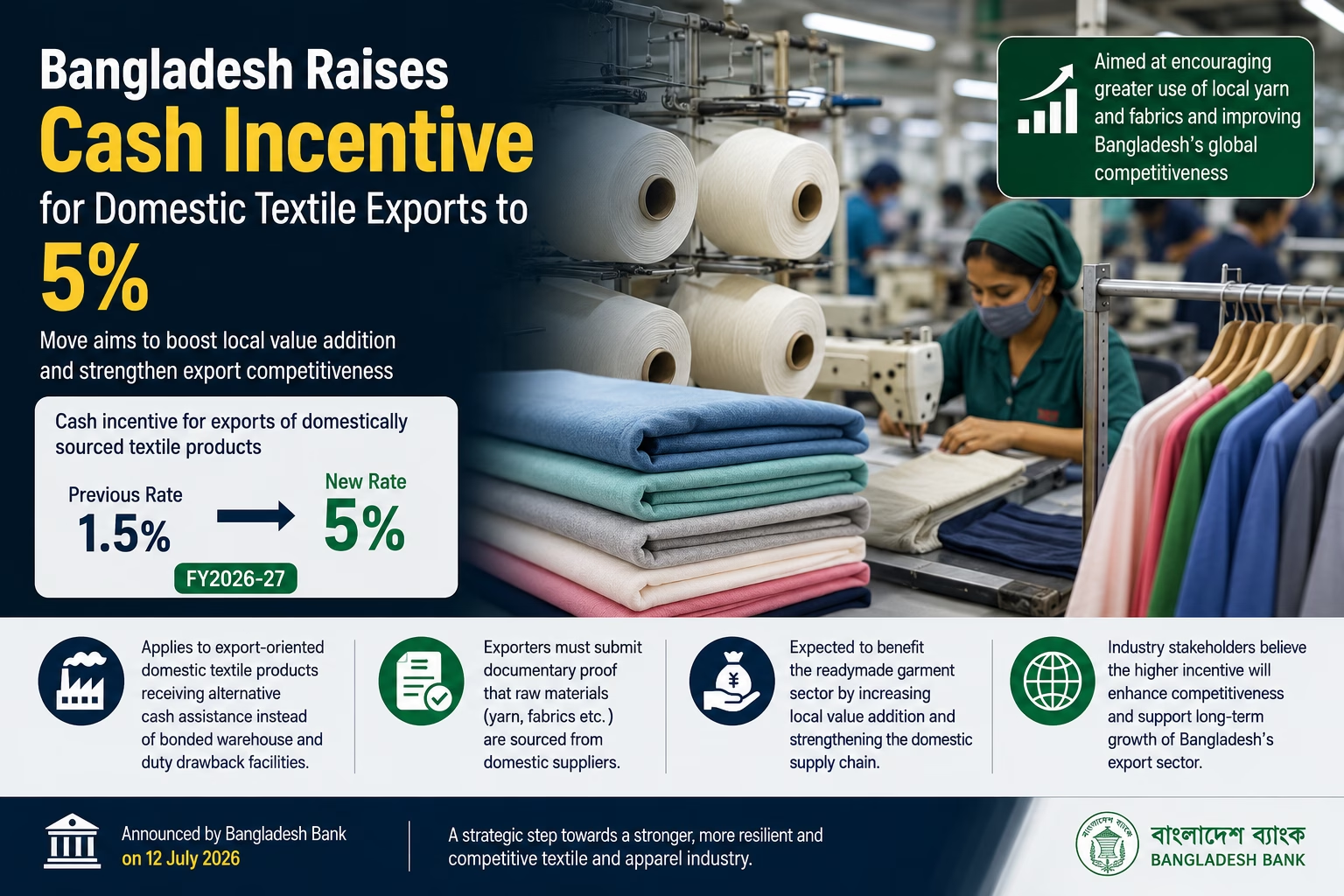
Bangladesh Raises Cash Incentive for Domestic Textile Exports to 5% to Boost Local Value Addition
Bangladesh has significantly increased the cash incentive for exports of domestically sourced textile products, raising the rate from 1.5% to 5% for the FY2026-27 fiscal year. The decision, announced through a circular issued by Bangladesh Bank on 12 July, is aimed at strengthening the country’s textile and apparel industry by encouraging exporters to source more raw materials from domestic manufacturers.
Bangladesh Raises Cash Incentive for Domestic Textile Exports to 5% to Boost Local Value Addition
The revised incentive applies to export-oriented textile products that receive alternative cash assistance instead of utilizing bonded warehouse and duty drawback facilities. By enhancing financial support, the government intends to promote greater use of locally produced yarn and fabrics, increase domestic value addition, and improve Bangladesh’s competitiveness in international markets.
The move is expected to provide a major boost to the country’s readymade garment (RMG) sector, which remains the largest contributor to Bangladesh’s export earnings. Encouraging garment manufacturers to purchase raw materials from local spinning, weaving, and textile mills is likely to strengthen the domestic supply chain while reducing reliance on imported inputs.
Under the revised policy, exporters seeking to benefit from the enhanced cash incentive must fulfill specific eligibility requirements. Members of the Bangladesh Garment Manufacturers and Exporters Association (BGMEA), the Bangladesh Knitwear Manufacturers and Exporters Association (BKMEA), and other recognized trade organizations will be required to submit documentary evidence proving that their yarn, fabrics, and other raw materials were sourced from domestic suppliers.
This verification process is intended to ensure that the incentive directly supports local textile producers and contributes to higher domestic value addition across the manufacturing ecosystem.
Industry stakeholders have welcomed the increase, stating that the higher incentive will encourage stronger integration between Bangladesh’s textile mills and garment exporters. Greater use of locally manufactured raw materials is expected to improve production efficiency, shorten lead times, and create additional demand for the country’s textile sector.
Experts also believe the policy will help Bangladesh maintain its competitive position in the global apparel market at a time when international buyers are increasingly seeking reliable, cost-effective, and resilient supply chains. By strengthening domestic sourcing, manufacturers can reduce exposure to global supply disruptions while improving the overall sustainability of the export industry.
The enhanced incentive aligns with Bangladesh’s broader strategy to expand domestic industrial capacity, increase export value addition, and support long-term growth of its textile and apparel sector. As one of the world’s leading garment exporters, the country continues to implement measures designed to improve the competitiveness of its manufacturers amid evolving global trade conditions.
With the incentive now set at 5%, exporters are expected to increase procurement from local textile producers, creating positive ripple effects throughout the industry’s value chain. The policy is anticipated to stimulate investment in domestic spinning, weaving, dyeing, and fabric production while reinforcing Bangladesh’s position as a major global textile and apparel manufacturing hub.
The latest decision reflects the government’s commitment to supporting export-led growth by promoting stronger domestic linkages and enhancing the value generated within Bangladesh’s textile industry.
