
CANAINTEX Introduces ESG Advisory Service to Strengthen Mexico’s Textile Industry
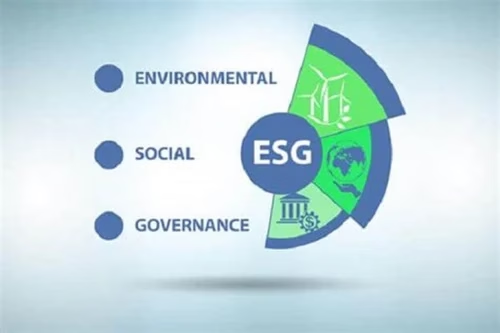
Mexico City: Mexico’s textile industry is taking a significant step toward sustainability with the launch of a new Environmental, Social, and Governance (ESG) consulting service by the National Chamber of the Textile Industry (CANAINTEX). The initiative is designed to help textile manufacturers improve competitiveness, comply with evolving international standards, and meet increasing expectations from investors, consumers, and global supply chains.
The advisory program, which became available to member companies on June 5, will support businesses in incorporating sustainability principles into their operations. The service will be coordinated by CANAINTEX’s Sustainability and Sustainable Development Goals (SDGs) team and aims to guide companies through the transition toward more responsible and transparent business practices.
The consulting service focuses on four key areas. These include evaluating current operations against ESG benchmarks, integrating SDG objectives into business strategies, providing guidance on environmental regulations at both national and international levels, and implementing pilot projects and technical training programs that help reduce environmental impacts while improving operational efficiency.
According to CANAINTEX, sustainability has become a critical requirement for companies wishing to remain competitive in global markets. International brands, financial institutions, and consumers increasingly demand transparency regarding environmental performance and responsible sourcing. Businesses that fail to adapt risk losing access to important supply chains and market opportunities.
The Chamber believes that adopting ESG practices can deliver several benefits, including improved profitability through efficient resource management, easier access to sustainable financing options, stronger regulatory compliance, enhanced corporate reputation, and greater acceptance in international markets.
To strengthen the industry’s future, CANAINTEX has identified three major priorities. The first is embracing circular economy principles by reducing waste and promoting the reuse and recycling of materials throughout production processes. The second is improving traceability across supply chains, allowing companies to track raw materials and measure environmental impacts at every stage of production. The third is increasing efficiency in the use of water, energy, and raw materials to build more sustainable and resilient operations.
Industry leaders also view sustainability as a powerful driver of innovation. Héctor Pérez of Textiles Lafayette highlighted that manufacturers have significantly expanded the use of recycled materials, particularly fibers produced from recycled PET bottles. Companies are also investing in technologies that reduce water consumption and minimize chemical usage during production.
He noted that sustainability-related innovation has accelerated dramatically over the past five years, transforming how textile businesses develop products and manage manufacturing processes.
The upcoming 2026 FIFA World Cup, which will be jointly hosted by Mexico, the United States, and Canada, is expected to create additional opportunities for the textile sector. Industry experts anticipate a substantial increase in demand for sportswear and performance textiles throughout the region.
Consumer expectations are also changing. Beyond appearance and branding, buyers now pay closer attention to technical features such as durability, UV protection, comfort, and overall fabric performance. This trend is encouraging manufacturers to invest in advanced textile technologies and higher-quality sustainable products.
Mexico remains one of North America’s leading textile and apparel exporters under the United States-Mexico-Canada Agreement (USMCA). Despite strong export performance, the sector continues to face competition from low-cost imports and challenges linked to slower growth in some manufacturing segments.
Looking ahead, CANAINTEX sees the upcoming review of the USMCA as an important opportunity to strengthen Mexico’s position as a strategic manufacturing hub in North America. Industry leaders are advocating for fair market conditions and stronger enforcement against illegal trade practices that affect domestic producers.
The Chamber also plans to work closely with government authorities and retailers to increase the presence of Mexican-made textile products in both public and private procurement channels. Its objective is to boost the share of locally manufactured products in the domestic market while reinforcing the national textile value chain.
Sustainability, innovation, and circular economy initiatives remain central to the Chamber’s long-term strategy. CANAINTEX also emphasized the importance of workforce development and employee well-being, particularly since women represent a large portion of the industry’s labor force.
Mexico’s textile industry continues to play a vital role in the national economy, supporting more than 400,000 direct jobs and approximately 1.2 million indirect jobs. The sector contributes significantly to manufacturing output and remains a key pillar of the country’s industrial development.
With the introduction of its ESG consulting service, CANAINTEX aims to help Mexican textile companies adapt to changing global expectations, strengthen their market position, and build a more sustainable future for the industry.
