
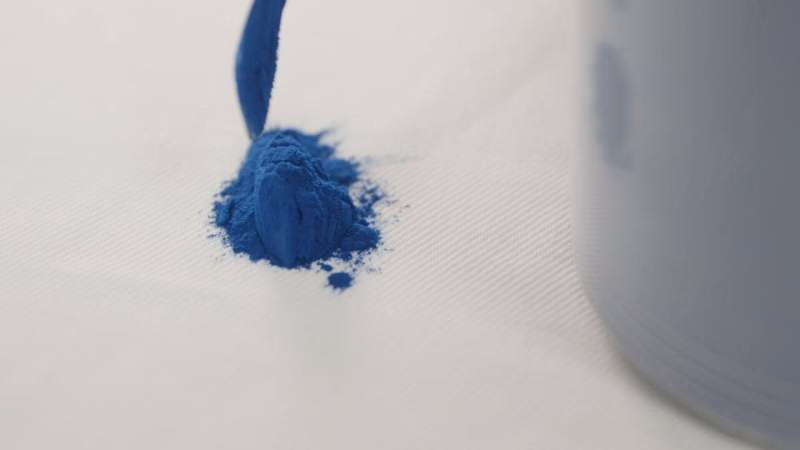
The global fashion industry is facing increasing pressure to reduce its environmental impact, and one of the biggest challenges lies in the dyeing process. Most textile dyes used today are derived from fossil-fuel-based chemicals, contributing to pollution, greenhouse gas emissions, and unsustainable manufacturing practices. Researchers in Europe are now exploring an innovative alternative: algae-based textile dyes.
Scientists involved in the European Union-funded LOCALITY project are investigating whether algae can provide a cleaner and more sustainable way to color textiles. The initiative brings together researchers, startups, and industry partners from several countries to develop environmentally friendly dyeing solutions that could help transform the textile sector.
At the forefront of this research is the University of Borås in Sweden, where scientists are studying how pigments extracted from algae can be used to dye fabrics. According to Anna Björkquist, a research engineer at the university, algae-derived materials are already being incorporated into textile fibers, and the next step is to utilize their natural pigments as textile dyes.
The project’s goal extends beyond simply replacing synthetic dyes. Researchers are working toward creating a circular, waste-free production system. In Norway, project partners cultivate algae using only sunlight, water, and surplus nutrients obtained from a nearby fish farm. This approach not only reduces resource consumption but also helps recycle nutrients that would otherwise go unused.
The LOCALITY project is experimenting with both commercially available algae and organic materials supplied by project partners. Pigments are extracted using environmentally friendly solvents based on water or alcohol, avoiding the harsh chemicals commonly used in traditional dye production.
One of the key materials being tested is Spirulina, a type of microalgae well known for its vibrant blue pigment. This naturally occurring color has attracted significant attention because blue dyes are among the most widely used in the textile industry.
Near Gothenburg, Sweden, startup Mounid is collaborating on the project to develop practical algae-based textile dyes. Ida Näslund, who is involved in the development process, explained that previous methods required a two-step procedure. Fabrics first had to be dyed and then treated separately to ensure the color remained fixed to the material.
The company has now developed a simplified “plug-and-play” approach, allowing manufacturers to apply the algae-based dye directly to textiles. This innovation could make the technology more attractive for industrial adoption by reducing processing time and complexity.
Despite the promising results, several challenges remain before algae-based dyes can be used on a large commercial scale. Initial laboratory trials must undergo extensive testing and validation to ensure they meet the performance standards required by the textile industry.
Researchers at the University of Borås are evaluating how effectively the blue pigment bonds with different textile materials. They are also examining whether the dyeing process can be scaled up for industrial production while maintaining efficiency and quality.
Another major focus is durability. The dyed fabrics must retain their color through washing, exposure to light, and everyday use. To achieve this, scientists are testing various binders and fixation methods to improve color fastness and longevity. The drying process is also being optimized to ensure it can meet the speed demands of modern textile manufacturing.
The development of algae-based dyes reflects a broader movement within the fashion industry toward sustainability and resource efficiency. As environmental regulations tighten and consumers demand greener products, innovative solutions such as natural dyes could play a significant role in reducing the sector’s environmental footprint.
Industry experts believe that algae-derived pigments may become part of a larger portfolio of sustainable materials that help reduce dependence on fossil fuels. However, widespread adoption will require not only technological breakthroughs but also a shift in industry mindset.
“I think the industry is realizing that it’s coming to its limits,” said Ida Näslund. “We need to change the way we work within the textile industry overall.”
If successful, algae-based dyes could offer a promising pathway toward cleaner textile production, helping the fashion industry move closer to a more sustainable and circular future.
