
Circular textiles startup refuses clothing ‘donations’ from ultra fast-fashion brand
Singapore-based circular clothing company Cloop has stated that it does not wish to support the disposal of cheap, disposable clothing that cannot be resold.
A Singapore-based textile reuse and recycling company has refused an offer to resell new clothes donated by an ultra-fast fashion brand, citing concerns that it would encourage further consumption of disposable goods.
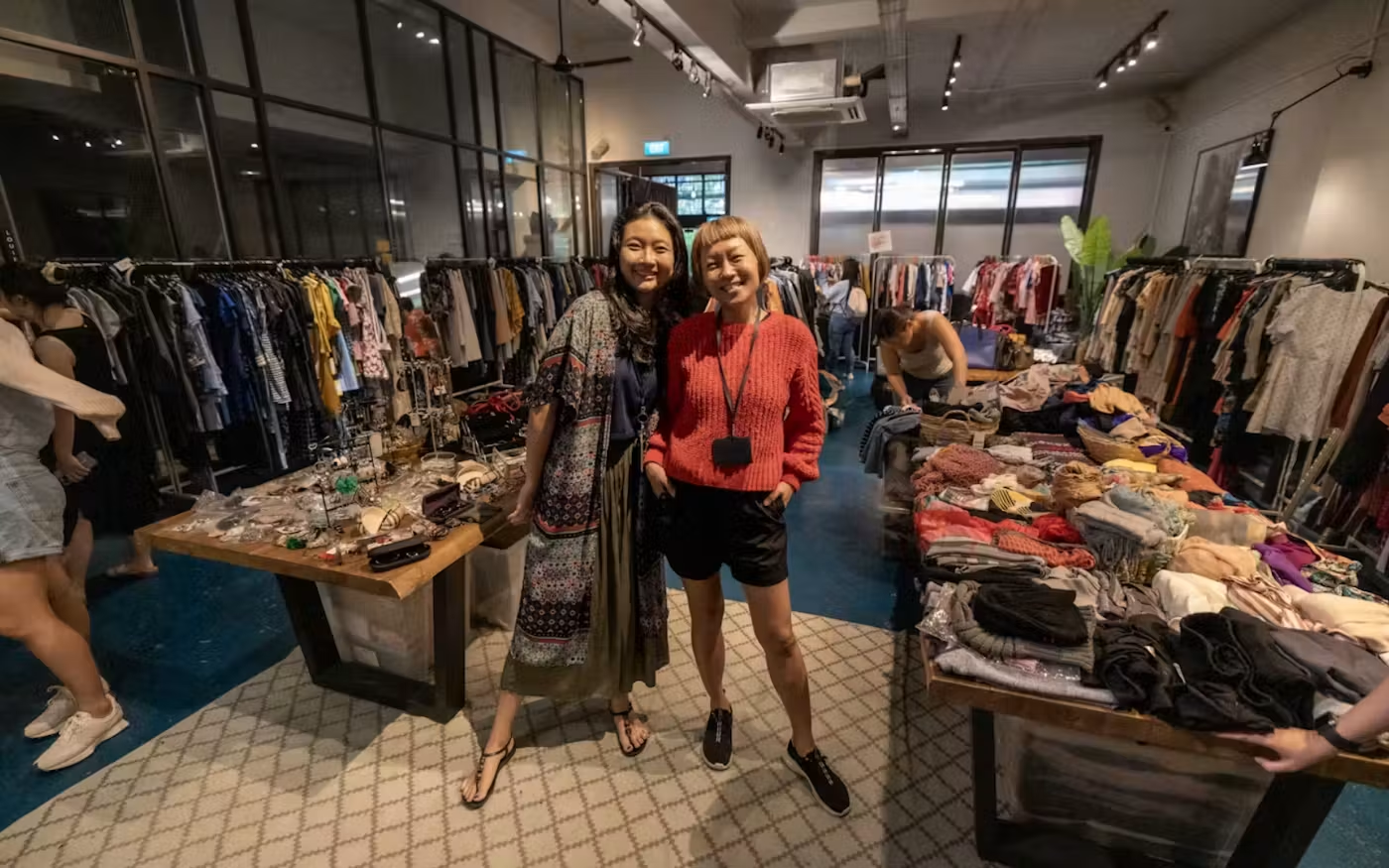
Cloop, a circular social enterprise that collects, repurposes, resells, and recycles used clothing, was approached by online retailer Shein, which offered to deposit boxes of garments used for marketing purposes, according to the company.
Cloop told Eco-Business that it does not want to become a “dumping ground” for unsold goods, particularly items that are poorly made, do not last, and cannot be resold — so it declined Shein’s offer.
The company collects used clothes, bags, shoes, accessories, and toys deposited via yellow bins located throughout Singapore.
It also organizes fashion swaps for quality clothing and recycles some disposed materials through its Malaysian partner, Life Line Clothing.
Cloop’s co-founder Jasmine Tuan told Eco-Business that the company encourages people to deposit well-made, usable items in good condition — and does not want to promote the consumption of cheap, disposable garments that cannot be resold at its fashion swaps.
The firm does receive some deposited clothing from Shein and other fast-fashion brands, but due to the poor quality of these items, they are rarely resold and are instead sent for recycling.
Shein clarified that it had reached out to three organizations in Singapore to repurpose or recycle store clothing samples rather than dispose of them.
Most textile waste in Singapore is incinerated.
In a statement, Shein said: “Where the opportunity arises, we consider whether surplus materials or items used for marketing and promotional purposes can be redirected for reuse, donation, or recycling rather than being sent for disposal.
In this instance, we contacted organizations on an informal basis regarding such clothing samples in our office.
“While this engagement was not intended as a formal partnership or an ongoing arrangement, we remain open to engaging with various stakeholders on practical approaches to reuse and recycling.”
The Singapore-headquartered fast-fashion brand generates a large amount of textile waste due to a business model that encourages the purchase of cheap, disposable clothing made from synthetic fabrics like virgin polyester.
Shein has become popular for offering trendy clothing at low prices during a cost-of-living crisis, but has faced significant criticism for worker exploitation, the use of unsustainable materials, and the presence of harmful chemicals in some of its products.
The company has made efforts to improve its sustainability credentials, and last year its climate targets were approved by the Science Based Targets initiative.
However, critics have pointed out that the company — which generates over 26.2 million metric tonnes of carbon equivalent per year from air freighted synthetic fabrics — has not made any effort to change a business model based on a throw-away culture.
Shein has also been involved in initiatives aimed at improving its reputation in fashion circularity.
It has partnered with Donghua University in China to scale textile-to-textile polyester recycling technologies and supported the 2025 Amplifier programme to develop and scale textile circularity solutions.
The company is also attempting to use more fabric surpluses, known as “deadstock,” where feasible in the production of new clothing.
It claims to be increasing the volume of deadstock it uses.
Ultra-fast fashion brands are responsible for an estimated 92 million tonnes of textile waste globally each year, with 80 percent ending up in landfills or incinerated.
Singapore generates over 206,000 tonnes of textile waste annually, with only a small fraction — 3 percent in 2024 — being recycled.
Experts note that most textile waste in Singapore is not technically recycled, but rather exported and resold overseas.
Singapore currently does not have an Extended Producer Responsibility scheme for textiles, which would hold fashion brands accountable for the waste generated by their operations.
