
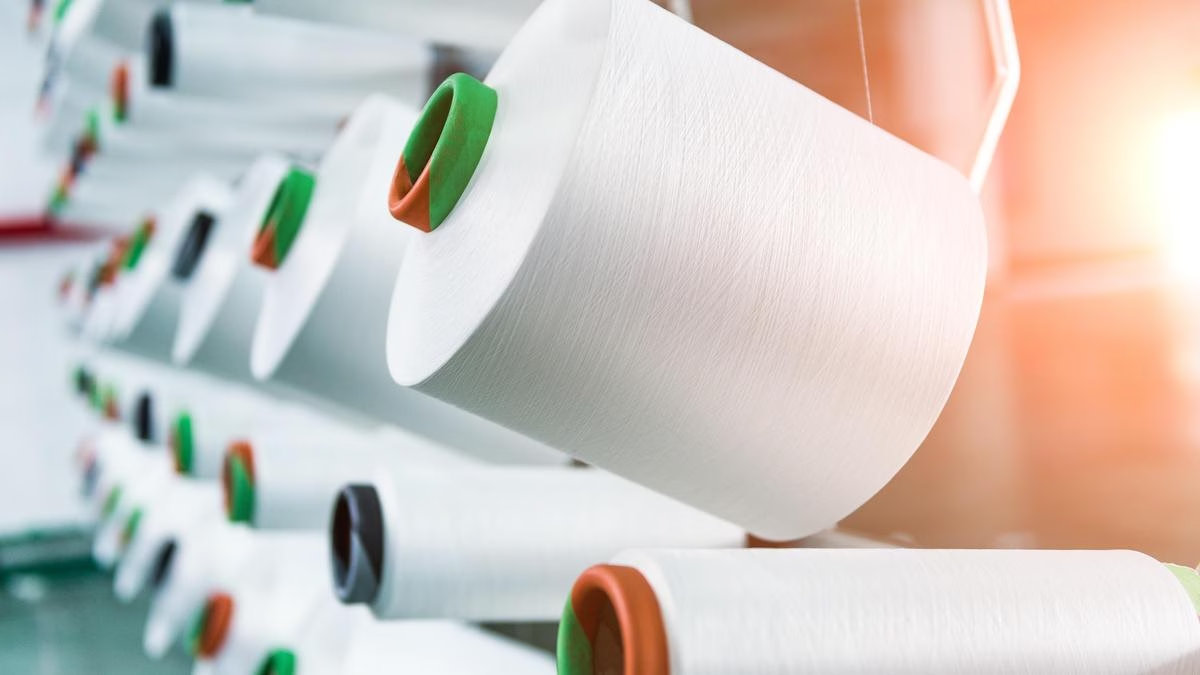
The textile and clothing industry has welcomed the government’s choice to temporarily remove import duties on cotton from June 1 to October 30, 2026. They see this as a timely step that will help increase the availability of raw materials, reduce costs, and make Indian textile exports more competitive.
Textile industry welcomes cotton import duty waiver
This decision comes as the industry is facing a big shortage of cotton. Industry groups estimate that domestic cotton production this season will be about 290 lakh bales, while the demand from the textile sector is expected to be between 330 lakh and 340 lakh bales, leading to a shortfall of 50 to 70 lakh bales.
The Southern India Mills’ Association (SIMA), based in Coimbatore, has been asking the government to remove the 11 percent import duty on cotton. Cotton prices have risen from around ₹54,500 per candy (355 kg) to nearly ₹71,000 per candy in the past two months but have recently begun to drop.
SIMA pointed out that similar duty exemptions were granted during April-October 2022 and August-December 2025, and they believe this latest decision will greatly help the entire cotton textile supply chain.
Dr. A. Sakthivel, Chairman of the Apparel Export Promotion Council (AEPC), mentioned that this decision will particularly help small and medium businesses struggling with increasing cotton and yarn prices.
He encouraged spinning mills to lower yarn prices to reflect the reduced cotton costs, which would stabilize the supply chain and help garment exporters compete better for export orders.
The Confederation of Indian Textile Industry (CITI) also praised the temporary removal of the duty, stating it would support the MSME-focused sector during uncertain global times. CITI Chairman Ashwin Chandran noted that the import duty had put Indian manufacturers at a disadvantage compared to other Asian countries that have duty-free access to cotton.
He stated that this relief would allow exporters to take advantage of opportunities from free trade agreements, including the upcoming India-UK trade deal. Chandran added that cotton imports are mainly based on quality needs and export commitments and do not replace domestic cotton.
India’s textile and apparel sector, which is the second-largest employer in the country, plays a significant role in exports and GDP. However, textile and apparel exports fell by 2.2 percent year-on-year to $35.79 billion in FY26, highlighting the need for actions that enhance the sector’s global competitiveness.
