
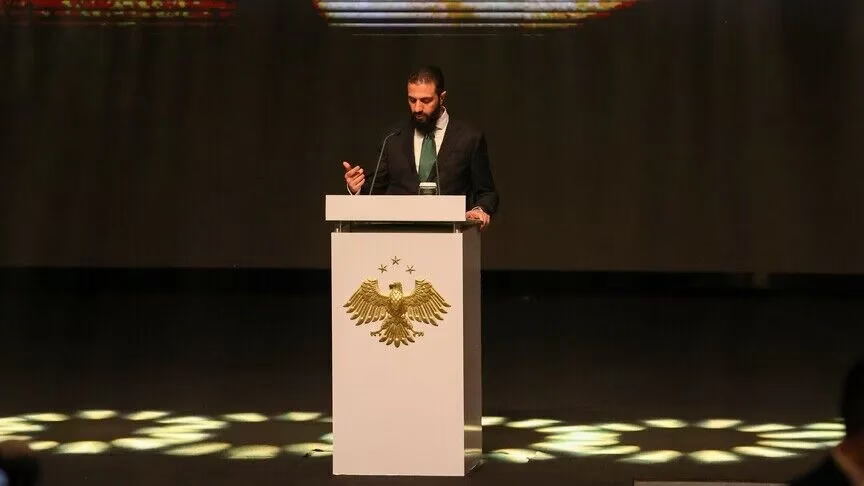
Syrian President Ahmed al-Sharaa Inaugurates NAS TEX 2026 to Revive Textile Industry and Support Reconstruction
First Syrian Textile Expo DAMASCUS: Syrian President Ahmed al-Sharaa on Saturday inaugurated the Syria International Textile Exhibition (NAS TEX 2026), describing the event as a milestone in the country’s reconstruction efforts and a catalyst for economic recovery, job creation and industrial revival.
First Syrian Textile Expo
Held at the Conference Palace in Damascus, the exhibition brings together government officials, international delegations, business leaders and textile industry stakeholders from across the region. Running from July 18 to 21, NAS TEX 2026 is designed to reconnect Syria’s textile sector with global technology, financing and export markets while strengthening domestic supply chains.
Speaking at the opening ceremony, President al-Sharaa said the textile industry has long been an integral part of Syria’s economic and cultural identity and played a central role in the country’s commercial prosperity.
He said reviving the sector would help rebuild the nation’s economy by drawing upon Syria’s rich industrial and artisanal heritage.
“This exhibition is a creative starting point for confronting poverty and hardship, supporting reconstruction, and creating thousands of jobs for Syrians,” al-Sharaa said.
The president added that Syria’s reconstruction is founded on civil peace, national unity, security, stability and economic growth, which together can restore the country’s reputation as a center of creativity, skilled craftsmanship and industrial excellence.
Referring to Syria’s historic legacy in textiles, silk production and Damascus steel, al-Sharaa said the combination of strength and flexibility symbolizes the country’s vision for the future. He also reaffirmed Syria’s commitment to building balanced and peaceful relations with countries willing to engage sincerely.
Government Targets Competitive Textile Industry
Syrian Economy Minister Mohammad Nidal al-Shaar described NAS TEX 2026 as more than a trade exhibition, calling it a symbol of confidence in Syria’s return as a regional manufacturing and commercial hub.
He noted that the textile industry had for decades been one of the country’s most important economic sectors, earning international recognition through the quality of Syrian-made products and the expertise of its manufacturers.
According to the minister, the government’s strategy focuses on creating a more competitive investment climate by reducing barriers to production, modernizing industrial facilities, encouraging innovation and expanding exports.
“Our goal is to make ‘Made in Syria’ a global symbol of quality and excellence,” al-Shaar said.
He added that Syria possesses the skilled workforce, industrial experience and strategic geographic location needed to become a regional center for textile manufacturing, supply chains and value-added production.
Largest Regional Textile Gathering
Fadi al-Muhaimid, founder and chairman of the exhibition’s higher organizing committee, described NAS TEX 2026 as the largest textile industry gathering in the region.
He said the exhibition provides a platform where manufacturing, investment and innovation come together, emphasizing that productive industries are essential for shaping the future.
“Textiles are part of the identity and cultural heritage of the Syrian people,” he said.
The opening ceremony was attended by representatives from numerous countries, including officials from the Turkish Embassy in Damascus, alongside business leaders and industry participants.
More Than 300 Exhibitors Participate
According to the Syrian Arab News Agency (SANA), NAS TEX 2026 spans 150,000 square metres and features more than 300 exhibitors from over 25 Arab and international countries.
The exhibition showcases a broad range of products and technologies, including fabrics, apparel, home furnishings, textile machinery, yarns, raw materials, digital transformation solutions and advanced manufacturing technologies.
Organizers say the event aims to strengthen cooperation among manufacturers, suppliers and technology providers while expanding Syria’s integration into regional and global textile value chains.
As Syria continues its post-conflict reconstruction, the government hopes the revival of its historic textile industry will play a key role in boosting industrial production, attracting investment, generating employment and restoring the country’s position in international textile trade.
