
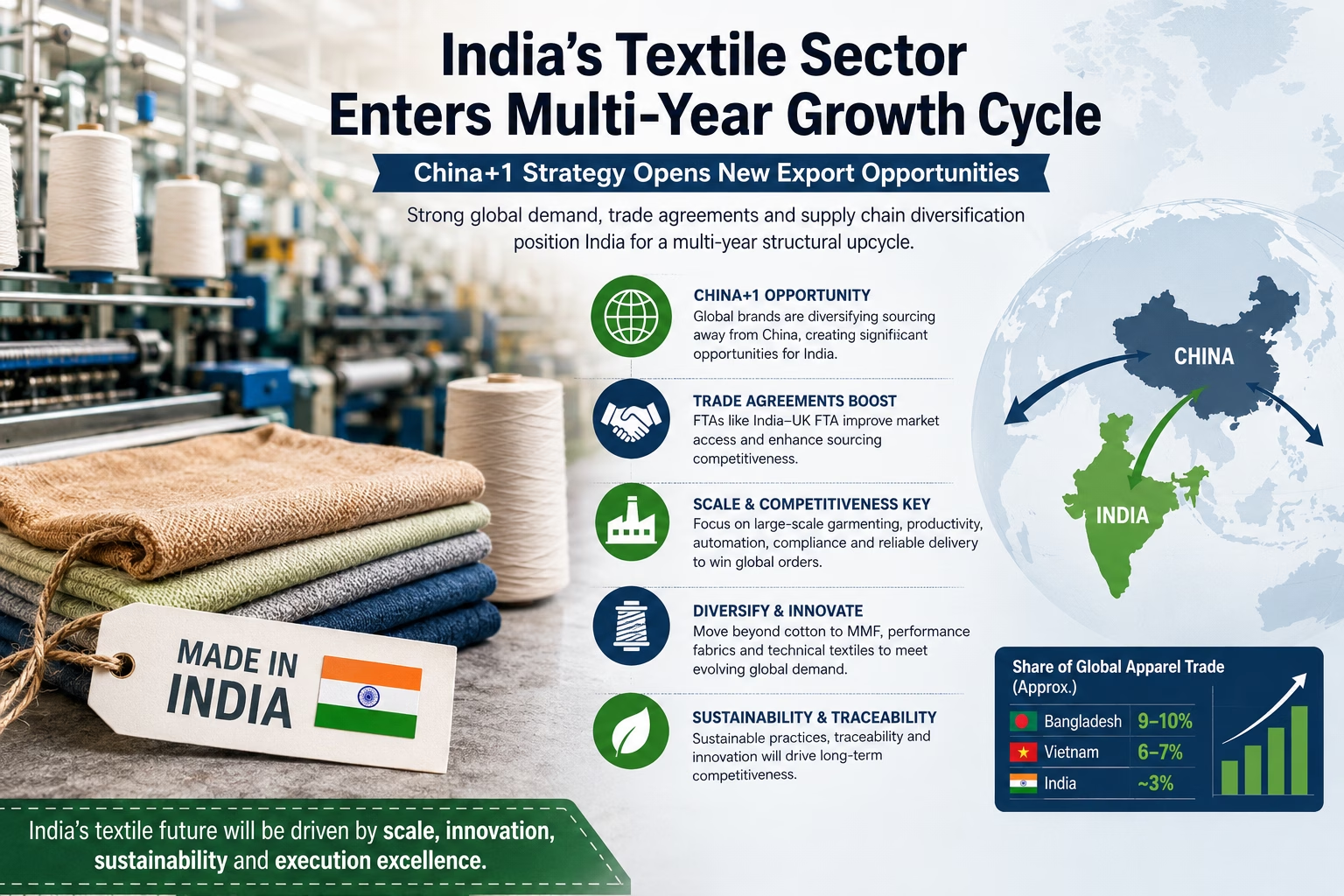
India’s Textile Sector Enters Multi-Year Growth Cycle as China+1 Strategy Creates New Export Opportunities: 360 One Capital
NEW DELHI: India’s textile and apparel industry is entering a multi-year structural growth phase, driven by the global China+1 sourcing strategy, supply chain diversification, and expanding market access through new trade agreements, according to a research report by 360 One Capital.
The report highlights that while the global opportunity for Indian manufacturers has never been stronger, long-term success will depend on improving manufacturing competitiveness, productivity, and execution rather than relying solely on favourable trade policies.
As international brands continue to diversify their sourcing away from China amid geopolitical uncertainties and supply chain risks, India has emerged as a preferred alternative. However, the report notes that India must move quickly to convert this opportunity into sustained export growth and increased global market share.
“The central question is no longer whether the opportunity exists. It is whether Indian manufacturers can build sufficient scale, productivity, technical capability, compliance and delivery reliability to capture the incremental sourcing volumes becoming available,” the report stated.
India Still Trails Key Asian Competitors
Despite being one of the world’s largest textile producers, India’s share of global apparel exports has remained largely unchanged at around 3% over the past two decades. In comparison, Bangladesh has increased its global market share to 9–10%, while Vietnam now accounts for 6–7% of global apparel trade.
According to the report, India’s competitive challenge has evolved beyond labour costs. Global buyers now evaluate suppliers on several factors, including manufacturing scale, product capabilities, lead times, logistics efficiency, sustainability, compliance standards, and supply chain resilience.
Garment Manufacturing Holds the Biggest Opportunity
The report identifies garment manufacturing as India’s largest structural opportunity. Fragmented production and limited manufacturing scale currently restrict the country’s ability to handle large global sourcing programmes and capture greater value within the textile supply chain.
Future competitiveness, it says, will increasingly depend on higher output per worker, automation, factory efficiency, and consistent delivery performance rather than low wage costs alone.
Diversification Beyond Cotton Essential
The research also emphasises the need for India to diversify beyond its traditional dependence on cotton.
Global demand is shifting rapidly toward man-made fibres (MMF), performance apparel, and technical textiles, requiring India to strengthen advanced fibre and yarn manufacturing while simultaneously improving cotton productivity, fibre quality, and traceability.
Trade Agreements Provide Momentum
Recent trade agreements, including the India–UK Free Trade Agreement (FTA), are expected to improve India’s competitiveness by offering tariff advantages in key export markets.
However, the report cautions that tariff benefits alone will not guarantee sustained business. Manufacturers must build operational readiness through expanded garmenting capacity, improved technical capabilities, stronger compliance systems, and the development of labour-intensive manufacturing clusters to fully benefit from new market access.
Automation and Sustainability to Drive Future Growth
Looking ahead, the report identifies automation, digitalisation, sustainability, and traceability as the next major competitive differentiators for textile exporters.
Companies that invest in integrated manufacturing, scalable garment production, innovation, and disciplined capital allocation are expected to outperform peers as global sourcing patterns continue to evolve.
According to 360 One Capital, India’s textile sector has a significant opportunity to strengthen its position in global supply chains, but the greatest rewards will go to manufacturers that combine scale, operational excellence, product innovation, and reliability with favourable trade conditions.
As the China+1 strategy continues reshaping global sourcing, India’s ability to execute on these structural improvements will determine whether it can significantly expand its share of the global textile and apparel market over the coming decade.
