
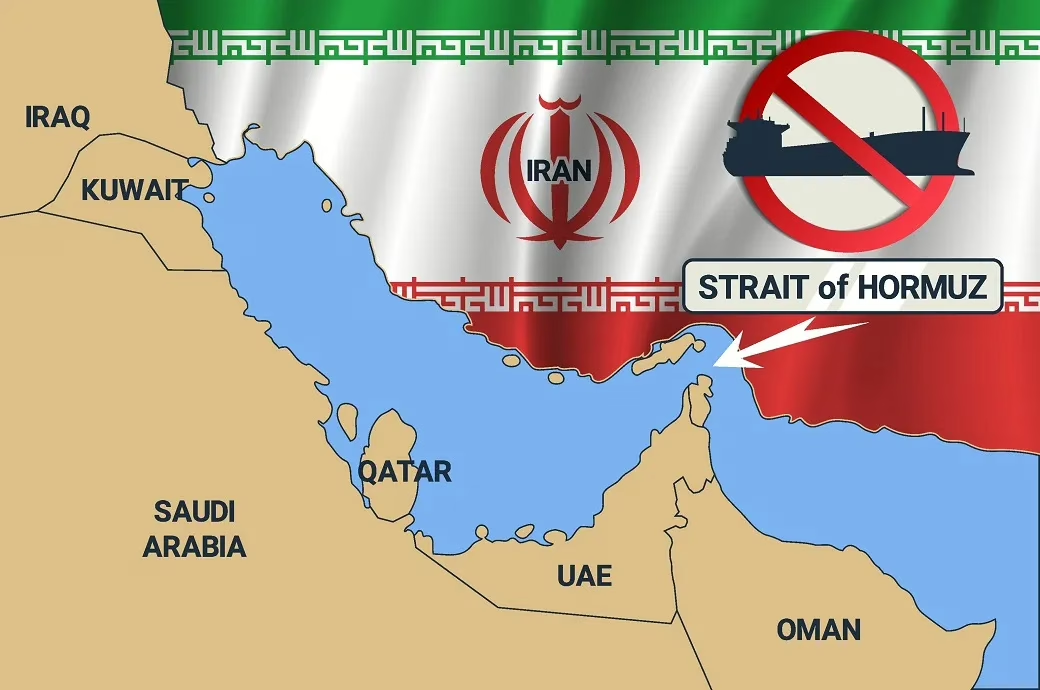
Hormuz risk: Rising geopolitical tensions around the Strait of Hormuz are once again drawing global attention—not only from energy markets but also from the textile and apparel industry. On 26 February 2026, market analysts warned that the growing risk in this critical oil transit route could create a hidden shock for polyester, the most widely used fibre in the world.
Hormuz risk: The hidden polyester shock to global apparel
The Strait of Hormuz, a narrow passage connecting the Persian Gulf to the Arabian Sea, handles a significant share of global crude oil and petrochemical exports. Major oil producers such as Saudi Arabia, United Arab Emirates, Kuwait, and Qatar ship their energy supplies through this corridor. Any disruption—whether due to military escalation, shipping restrictions, or heightened security concerns—can immediately influence oil prices and petrochemical feedstock costs.
Oil Volatility and Polyester Impact
Polyester is derived from petrochemicals, primarily purified terephthalic acid (PTA) and monoethylene glycol (MEG), both of which are closely linked to crude oil and natural gas prices. As geopolitical tension between United States and Iran intensifies, oil markets have already started factoring in a geopolitical risk premium.
Even without a direct supply disruption, crude oil prices have shown upward pressure in recent days. This volatility is translating into increased costs for polyester raw materials. Analysts say that polyester producers in Asia are beginning to face margin stress as feedstock prices fluctuate.
Since polyester accounts for more than half of global fibre production, the consequences could be widespread. The apparel industry—especially fast fashion, sportswear, and performance textile segments—relies heavily on synthetic fibres for durability, flexibility, and cost efficiency.
Ripple Effect Across Textile Hubs
The shock is not limited to oil-producing countries. Manufacturing hubs such as China, India, Bangladesh, and Vietnam depend on stable polyester supply for yarn spinning, fabric production, and garment exports.
If feedstock costs continue to rise, polyester filament yarn (PFY) and polyester staple fibre (PSF) prices are expected to increase. Mills operating on thin margins may struggle to absorb the additional expense. Garment manufacturers, already facing pressure from global demand fluctuations and retail pricing resistance, could see profitability shrink further.
Export-oriented economies may feel the pressure most strongly. Buyers in Europe and North America typically resist mid-season price revisions, forcing suppliers to either renegotiate contracts or accept reduced margins.
Freight and Insurance Concerns
Beyond raw material costs, shipping and logistics risks are also growing. Heightened tension in the Strait of Hormuz can increase marine insurance premiums and freight charges. Shipping companies may impose additional risk surcharges if security threats escalate. Even minor delays in transit schedules can disrupt just-in-time manufacturing models that dominate today’s global apparel supply chains.
This combination of rising raw material costs and logistics uncertainty makes the situation particularly sensitive for polyester-dependent value chains.
Fast Fashion Under Pressure
Fast fashion brands rely heavily on polyester because of its affordability and versatility. It is widely used in activewear, outerwear, blended fabrics, and low-cost mass production garments. A sustained increase in polyester prices could force brands to reconsider sourcing strategies.
Some may attempt to shift partially toward cotton or viscose. However, cotton markets are also subject to climate risks and crop variability. Recycled polyester, though gaining popularity for sustainability reasons, remains influenced by virgin polyester pricing trends.
Industry experts suggest that if oil prices remain elevated for a prolonged period, apparel retail prices may eventually rise. While short-term volatility can be managed, a long-term geopolitical crisis in the Hormuz region would create structural cost pressure across textile supply chains.
Strategic Response
Textile and apparel companies are closely monitoring developments. Diversifying supplier bases, securing long-term raw material contracts, and increasing safety inventory levels are among the strategies being discussed. Some manufacturers are also accelerating investments in recycled materials and exploring alternative fibre blends to reduce dependency on oil-linked inputs.
Digital supply chain monitoring and predictive analytics tools are becoming more important in assessing risk exposure. Early forecasting of oil price movements and geopolitical events may help businesses prepare procurement strategies in advance.
A Hidden but Powerful Risk
The Hormuz risk is often seen as an energy market issue, but its impact on polyester reveals a deeper connection between geopolitics and fashion. Polyester may appear to be a stable, widely available fibre, yet its foundation remains closely tied to oil flows through one of the world’s most strategically sensitive chokepoints.
As of 26 February 2026, the situation has not resulted in physical supply disruption. However, the mere possibility of escalation has already influenced market sentiment. For the global apparel industry, this serves as a reminder that supply chain resilience is no longer optional—it is essential.
If tensions ease, polyester markets may stabilize. But if geopolitical uncertainty persists, the hidden polyester shock could become a visible challenge for global apparel in the months ahead.
