
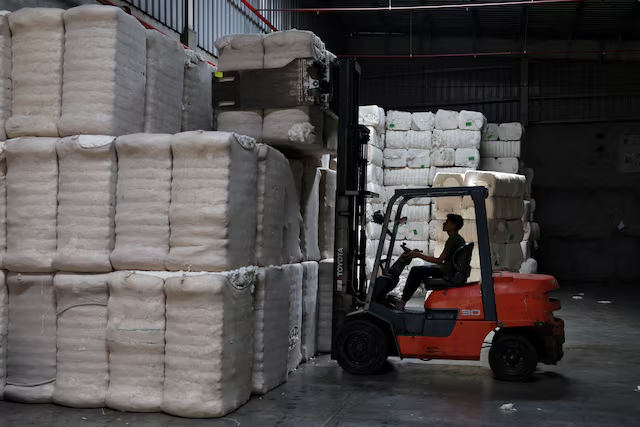
India has removed import duties on cotton for five months to help textile exporters, according to a government announcement on Saturday. This decision aims to increase the supply of clean natural fiber for textile manufacturers who are facing strong demand for yarn from other countries.
As the second-largest cotton producer in the world, easing these import restrictions may help stabilize global prices.
However, it might not lead to a significant increase in imports because the falling value of the rupee has made buying cotton from abroad a bit more expensive than purchasing it locally.
The current 11% import tax will be lifted until October 30, as stated by the government. The textile industry, like many others, is dealing with rising costs due to supply chain issues caused by the war in Iran. This move should benefit local producers, especially smaller businesses, by making cotton more available.
Yet, industry experts point out that Indian cotton is currently the cheapest available globally and there is a good supply from this year’s harvest, which might limit the need for imports. Vinay Kotak, who leads the Cotton Association of India, mentioned to Reuters, “At current price levels, imports are not economically attractive.”
He added that mills focused on exports need clean cotton and that around 600,000 bales could be imported during this duty-free period. The cotton is expected to come from countries like Australia, Brazil, the United States, and Africa, which have surplus supplies.
Last year, India allowed duty-free cotton imports from mid-August until the end of December, leading to record imports of 4.7 million bales in the current marketing year, which started on October 1. Cotton in India is mainly grown in areas that depend on rain, and any disruption in monsoon rains due to an El Nino weather pattern could lower the output of the new crop being planted in June and increase the need for imports, as noted by a dealer from a global trading company in New Delhi. “In that case, the government might extend the duty-free import period beyond October, as they did last year,” he said.
