
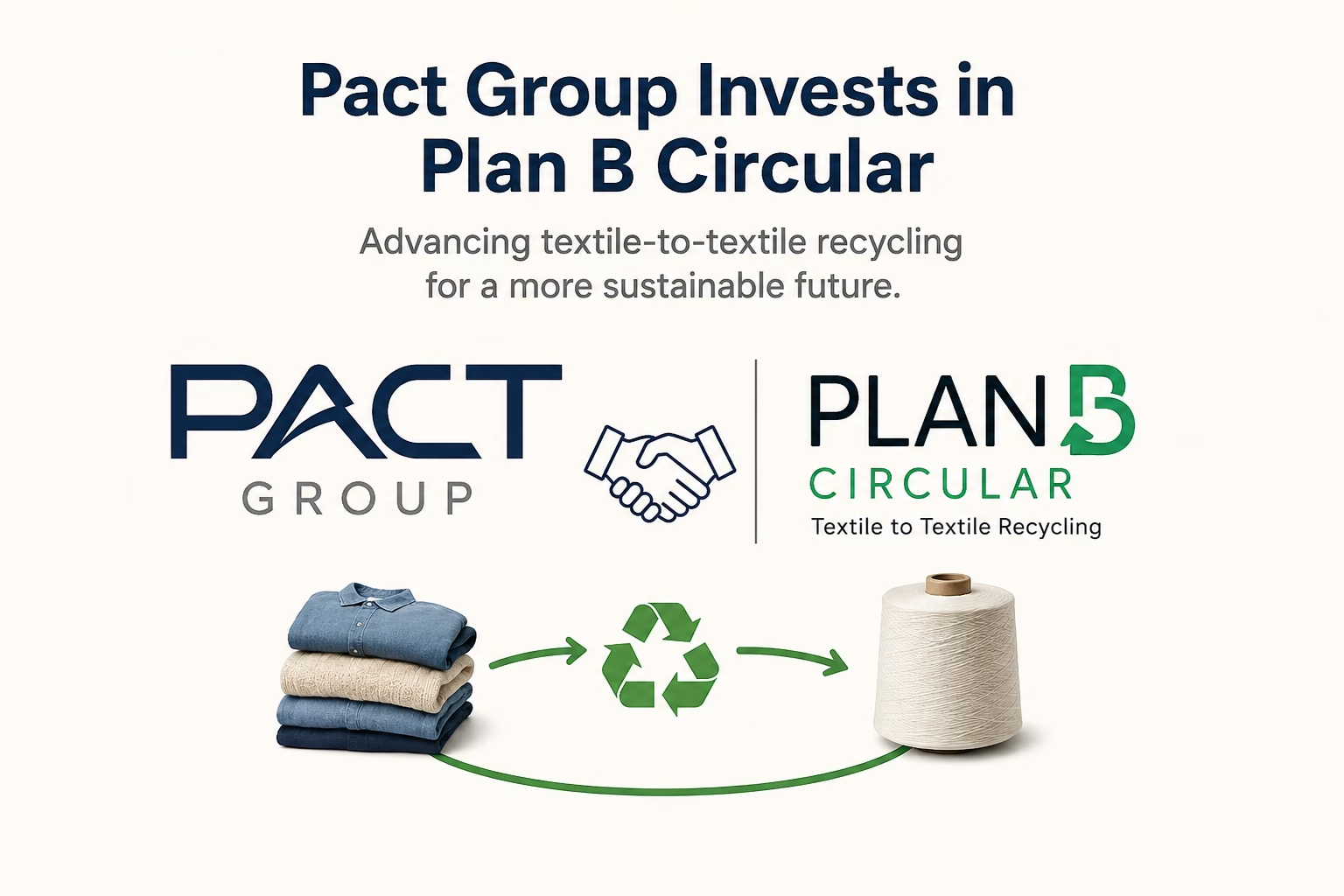
Pact Group Invests in Plan B Circular to Advance Textile-to-Textile Polyester Recycling
Australia’s Pact Group Strengthens Circular Fashion Strategy Through UK Recycling Partnership
Australia-based Pact Group has invested in Plan B Circular, the UK’s first commercial-scale textile-to-textile (T2T) polyester recycling company, marking an important development in the global circular fashion and sustainable textile industry.
The investment reflects growing industry focus on reducing textile waste and preparing for future sustainability regulations expected across Europe. With increasing demand for recycled materials, the partnership aims to accelerate textile circularity and create scalable recycling solutions for fashion brands worldwide.
Growing Demand for Textile-to-Textile Recycling
The fashion industry is facing pressure to reduce environmental impact and move away from traditional recycling methods. Pact Group believes expected European Union regulations, anticipated from 2028 onward, will encourage brands to shift from recycled bottle flake toward textile-to-textile recycled polyester.
Industry experts expect these upcoming changes to influence sourcing decisions across global fashion supply chains. As a result, brands are increasingly exploring verified and traceable recycled textile solutions to remain competitive.
According to Plan B Circular, companies that begin integrating textile-to-textile recycled materials today will be better positioned for future compliance and sustainability goals.
Building Infrastructure for Circular Textiles
Currently, only around 1% of used textiles are recycled back into textile products globally, while most discarded garments are either sent to landfill or destroyed through incineration.
To address this challenge, Plan B Circular, together with Project Re:claim, is developing infrastructure that supports large-scale polyester textile recycling.
Project Re:claim operates as a joint venture between Plan B Circular and Salvation Army Trading Company Ltd (SATCoL). The initiative manages the UK’s first commercial-scale facility designed to process both post-industrial and post-consumer polyester textile waste.
The facility is already conducting trials to transform used polyester textiles into recycled PET pellets that can later be converted into yarn and reused in textile manufacturing.
Pact Group Expands Presence in the Fashion Supply Chain
Pact Group already has experience within the global fashion ecosystem through its Retail Solutions division, which collects and redistributes used plastic garment hangers from retail stores around the world.
Through this investment, Pact intends to expand its sustainability capabilities beyond packaging and hanger reuse and into broader textile recycling and circular economy initiatives.
The agreement will also explore opportunities to expand operations into Asia and additional high-growth international markets.
Industry Leaders Highlight Future Opportunities
Tim Cross, Chief Executive Officer of Plan B Circular, stated that the company has invested years into developing infrastructure capable of making textiles truly circular.
He noted that expected EU regulatory developments could become a major turning point for the market, encouraging fashion brands to secure reliable and traceable sourcing routes in advance.
Meanwhile, SATCoL contributes significant scale to the initiative as the UK’s largest charity-owned textile collector, processing approximately 77,000 tonnes of textiles each year.
Camillo Colombo from Pact Group emphasized that the investment demonstrates the company’s commitment to supporting sustainable and verifiable solutions for clothing manufacturers and retailers.
Future of Sustainable Textile Recycling
As environmental regulations strengthen and consumer demand for sustainable fashion increases, textile-to-textile recycling is expected to become a key component of the global apparel industry.
The partnership between Pact Group and Plan B Circular represents an important step toward reducing textile waste and creating a more circular, efficient, and sustainable fashion supply chain.
