
Cotton Duty Waiver Lifts Textile Stocks, But US Tariffs Cast Long Shadow
Market Performance
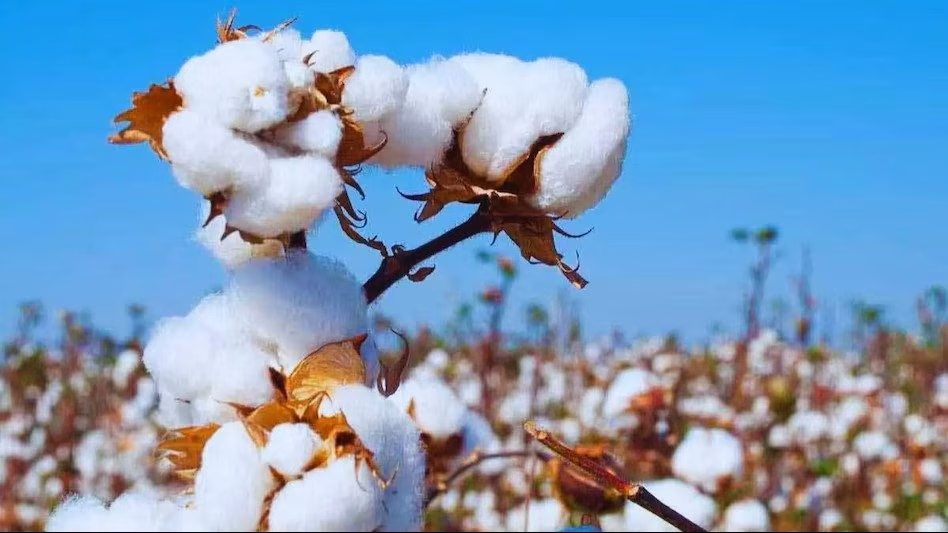
Textile stocks got a boost in the stock market today due to India temporarily removing duties on raw cotton imports until September 30. Shares of Vardhman Textiles, Ambika Cotton Mills, Gokaldas Exports, and Indo Count Industries rose, showing positive feelings among investors.
The decision to import cotton without paying duties helps companies save money now, especially since their profit margins are tight. However, the bigger problem for the sector—the high tariffs imposed by the US—still looms over the future.
Main News
The government’s decision to allow duty-free cotton imports gives companies temporary relief. Lower costs for raw materials strengthen the supply chain and improve competitiveness in yarn, fabric, garments, and home textiles. But this relief is not enough because of the US tariff issue:
Starting August 27, Indian exports will face 50% tariffs from the US administration.
A planned visit by US trade negotiators to New Delhi (August 25–29) has been canceled. Hope for progress on a bilateral trade deal is now delayed, along with the expectation of reducing the extra 25% duty. This makes Indian exports more expensive compared to other countries.
Company Details
Vardhman Textiles
About 30-35% of its yarn exports go to Bangladesh, so it is not directly affected by US tariffs. There is room to improve profits because lower cotton duty cuts raw material costs. So far, there has not been much disruption in the business.
Ambika Cotton Mills
The company benefits from lower cotton duties, but worries about US tariffs could affect how competitive it is in export markets. The focus is on keeping profits safe even with fluctuating costs.
Gokaldas Exports
About 70% of its income comes from North America. It is heavily impacted by the US tariff system. The company is working to spread its business: exports to the EU increased to 13.4% in Q1FY26 from 11.6% in Q4FY25.
Indo Count Industries
Approximately 70% of its sales come from exports, with the US as the main market. Strong reliance on US exports means tariffs affect profits directly.
Tariff Pressure in Numbers
Indian exports now face some of the highest tariffs in the textile trade:
Carpets: 52.9%
Knitted garments: 63.9%
Woven garments: 60.3%
Textiles & made-ups: 59%
These high tariffs make Indian products less competitive compared to Bangladesh (20% duty), Vietnam (20%), and China (30%).
Summary of the Article
The removal of cotton import duty has improved market sentiment today, giving Vardhman Textiles, Ambika Cotton Mills, Gokaldas Exports, and Indo Count Industries some breathing room. But the optimism is limited by the US tariff problem, which threatens to hurt competitiveness in India’s largest export market.
Unless companies move to diversify their markets beyond the US and adjust their pricing, the future may still be difficult despite the short-term cost relief.
