
Sri Lanka Apparel Exports Stay Strong in May as EU Demand Rises
June 30, 2025 – Colombo:
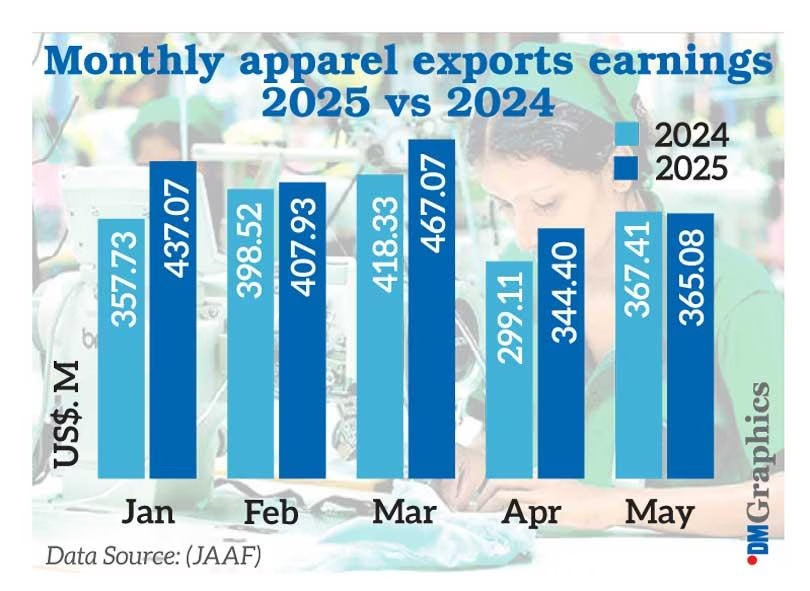
Sri Lanka’s apparel industry has shown resilience in May 2025, maintaining steady export earnings despite facing some market challenges. According to recent data, the country’s apparel export earnings dipped slightly by just 0.63%, totaling US$ 365.08 million compared to May last year. This small drop is considered manageable, thanks to strong demand from the European Union (EU) and non-traditional markets.
EU and Emerging Markets Support Stability
In May, while traditional markets like the United States and United Kingdom saw a dip in demand, Sri Lankan apparel makers found support in newer destinations.
Exports to the EU increased by 5.15%, and exports to other international markets rose by 11.1%, helping to cushion the impact of slower sales in the US and UK.
However, there was a decline of 7.59% in exports to the United States and 6.81% to the United Kingdom, highlighting continued uncertainty in Western consumer behavior. The Joint Apparel Association Forum (JAAF), a key industry body, described this as a sign of “ongoing demand volatility” in Western markets.
Strong Start to the Year
Despite the flat performance in May, the overall picture from January to May 2025 tells a story of strength and growth. In these five months, Sri Lanka earned US$ 2.02 billion from apparel exports, a 9.8% increase compared to the same period last year.
This growth was mainly driven by:
- A 15.36% increase in exports to the EU (excluding the UK)
- A 13.12% rise in exports to non-traditional or emerging markets
- Even the US and UK markets, despite the May dip, showed year-to-date gains of 6.52% and 3.74%, respectively
This suggests that strategic diversification of export destinations and a shift to value-added products are helping Sri Lanka’s apparel sector stay competitive in a tough global environment.
JAAF Reacts Positively
The JAAF expressed optimism about the apparel sector’s performance, praising the industry’s ability to adapt to shifting global trends.
“The industry’s year-to-date performance demonstrates resilience and adaptability, driven by strategic market shifts and continued investment in value-added products,”
said a spokesperson from JAAF.
They also highlighted that momentum in EU and emerging markets is a good sign for long-term stability and growth.
Key Takeaways from May 2025 Apparel Export Data
| Region/Market | May 2025 Change (YoY) | Jan–May 2025 Growth (YoY) |
|---|---|---|
| United States | ▼ 7.59% | ▲ 6.52% |
| United Kingdom | ▼ 6.81% | ▲ 3.74% |
| European Union (excl. UK) | ▲ 5.15% | ▲ 15.36% |
| Non-Traditional Markets | ▲ 11.1% | ▲ 13.12% |
| Overall Apparel Exports | ▼ 0.63% | ▲ 9.8% |
What Are Non-Traditional Markets?
Non-traditional or emerging markets refer to countries outside of Sri Lanka’s major buyers like the US and EU. These may include:
- Countries in the Middle East
- Asia-Pacific nations
- Africa
- South America
Tapping into these markets helps reduce over-reliance on any single economy and gives exporters new opportunities for growth.
Why Are US and UK Markets Slowing Down?
Western markets like the US and UK have seen uncertain consumer demand, possibly due to:
- High inflation and interest rates
- Rising cost of living
- Geopolitical tensions
- Shifts in consumer spending toward services and essentials
These factors have made retailers cautious, leading to reduced apparel orders. However, Sri Lankan exporters seem to have adapted quickly by looking toward more stable or growing markets in the EU and elsewhere.
Focus on Value-Added Products
One reason behind the success in new markets is Sri Lanka’s increased focus on value-added garments. These include:
- Technical textiles
- Eco-friendly and sustainable clothing
- Fashion-forward designs
- Custom-made or branded apparel
Such products bring higher prices and help Sri Lankan exporters stand out from low-cost competitors. The investment in design, innovation, and sustainability is paying off.
Industry Outlook for 2025
Looking ahead, Sri Lanka’s apparel industry seems to be on the right path. Even though challenges remain in global markets, the industry’s:
- Diversification strategy
- Investment in quality
- Flexible approach to market shifts
are giving it a competitive edge. Analysts believe that if these trends continue, Sri Lanka could achieve double-digit growth in apparel exports by the end of 2025.
The JAAF also plans to:
- Promote Sri Lanka as a high-quality and ethical sourcing destination
- Encourage exporters to attend international trade shows
- Push for more bilateral trade agreements that open up market access
