
Textile Chemical Market Set to Reach USD 44.47 Bn by 2030, Driven by Innovation and Regional Consolidation
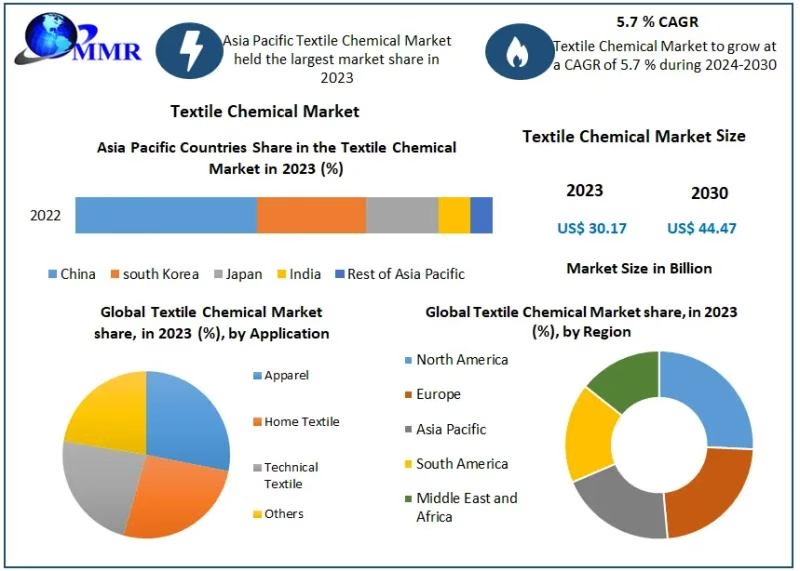
The Textile Chemical Market was valued at USD 30.17 Bn in 2023 and is expected to grow at a CAGR of 5.7% from 2024 to 2030, reaching approximately USD 44.47 Bn by 2030. This growth is powered by technological advancements, sustainability trends, and rising demand for functional finishes and specialty chemicals in the textile industry.
Higher demand is prominently observed in the Asia Pacific region, driven by strong textile manufacturing hubs. The competitive landscape includes leading players such as Archroma, Huntsman International LLC, Dow, and BASF SE, who are investing heavily in R&D, sustainability, and strategic mergers and acquisitions to strengthen their market position.
►Textile Chemical Growth in the United States: Market Expansion and Green Chemistry
In the United States, the textile chemical market is experiencing growth fueled by an increasing shift towards eco-friendly and sustainable chemicals. Key players like Huntsman International LLC and Dow are actively innovating to meet consumer and regulatory demands for safer formulations. The U.S. market benefits from advanced manufacturing capabilities and a growing demand for smart textiles in sportswear and healthcare sectors.
Recent Mergers & Acquisitions: The U.S. market saw notable consolidation moves, such as Milliken & Company acquiring Borchers Group Limited, enhancing its portfolio in specialty chemicals to support sustainable textile production.
►Textile Chemical Opportunities in Asia Pacific:
Manufacturing Powerhouse and Sustainable Shift
The Asia Pacific region leads the global market with robust demand, accounting for the highest market share due to countries like China, India, and Bangladesh. Rapid urbanization, rising disposable incomes, and government support for the textile industry drive this demand.
Recent Developments: Archroma expanded its production capacity in China to cater to the growing local demand, while Huntsman invested in new application laboratories in India, aiming to strengthen partnerships with local manufacturers. Additionally, the push for waterless dyeing technologies and biodegradable chemicals is shaping the market trends across Asia Pacific.
Textile Chemical Trends in Europe: Sustainability and Innovation at the Core
Europe remains at the forefront of sustainability-driven textile chemicals, with stringent regulations encouraging manufacturers to innovate. Companies like BASF SE and Archroma focus on bio-based and recycled chemicals to align with EU Green Deal targets.
Key Recent Developments: BASF SE launched a new range of bio-based reactive dyes in Germany, and Archroma partnered with several European brands to offer environmentally friendly dyeing solutions. This region sees growing demand for high-performance finishing agents, especially in technical textiles and automotive fabrics.
►Textile Chemical Consolidation in the Middle East and Africa: Strategic Expansions and New Facilities
In the Middle East and Africa, the market is evolving through strategic expansions, mainly to cater to emerging textile hubs in countries like Egypt, Turkey, and South Africa. The demand for specialty chemicals is rising, supported by the growth of the apparel and home textile sectors.
Recent M&A & Updates: Huntsman International LLC opened a new blending facility in the UAE to serve local textile mills, while Archroma expanded its distribution network across North Africa to meet growing customer needs.
Market Segmentation: In-Depth Analysis:
• by Process
Pre Treatment
Coating
Treatment of Finished Products
• by Product
Coating &Sizing Chemicals
Colorants & Auxiliaries
Finishing Agents
Surfactants
Denim Finishing Agents
Over the course of the forecast period, colorants and auxiliary products are anticipated to dominate the textile chemical market. Auxiliaries and colorants are essential for improving fabrics’ aesthetic appeal. They offer a wide range of vivid hues, tones, and shades, making it possible to create fabrics that are visually appealing. These substances are adaptable and are used in many phases of the textile production process, from printing to dying. To accommodate a range of customer preferences, they are used to create various effects, such as gradients, complex patterns, and solid colors. Auxiliaries are necessary to guarantee the longevity and quality of coloring.
• by Application
Apparel
Home Furnishing
Technical Textiles
Learn about the top players driving innovation in the Market :
• Global
1. DyStar (Singapore)
2. Sumitomo Chemical Co., Ltd. (Japan)
3. Rudolf Group (Germany)
4. Croda International Plc (UK)
5. Tanatex Chemicals B.V. (Netherlands)
• North America
1. Kemin Industries, Inc. (US)
2. Solenis (US)
• Europe
1. Tanatex Chemicals B.V. (Netherlands)
2. Lamberti S.p.A. (Italy)
• Asia Pacific
1. NICCA Chemical Co., Ltd. (Japan)
2. Lonsen Inc. (China)
3. Everlight Chemical Industrial Corp. (Taiwan)
4. Transfar Group Co., Ltd. (China)
5. KISCO Ltd. (South Korea)
6. Sarex Chemicals (India)
7. Dystar Singapore Pte Ltd (Singapore)
8. Sinochem Group (China)
9. Jiangsu Sanfangxiang Group (China)
